Eclipse, Equinox, & Eridani

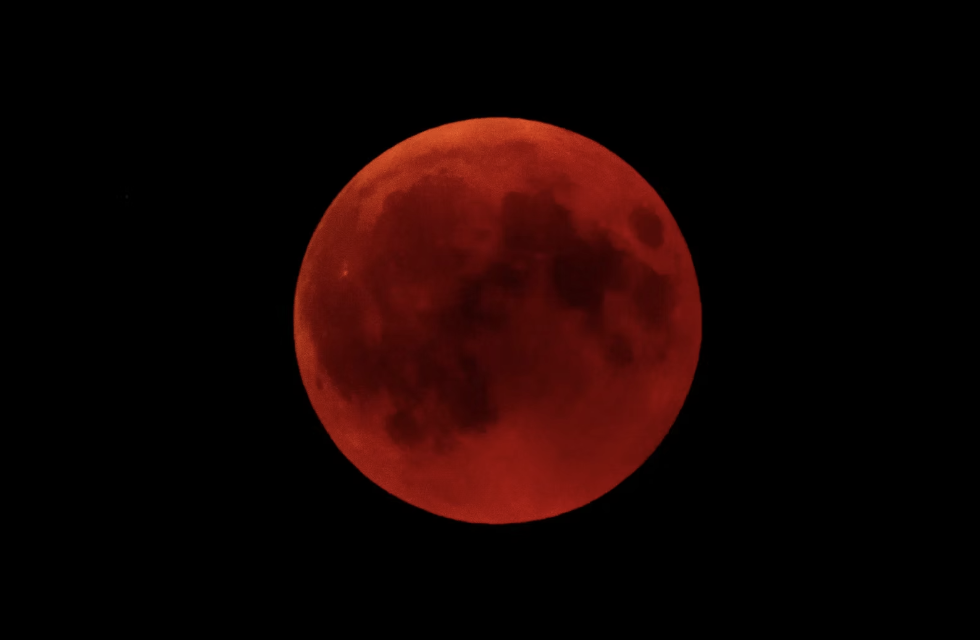
Spring is almost here, and March brings a strong lineup of celestial highlights. It begins with the only total lunar eclipse of 2026, followed by rare planetary pairings and a razor-thin crescent Moon meeting Venus on the Spring Equinox. A new set of Quests will guide you to the season’s best deep-sky targets, and we’re spotlighting our first-ever Gravity Guild cohort. We’re also featuring the nearby star system at the center of Project Hail Mary, just as it prepares for its Hollywood moment.
Additionally, this Spring, all members can follow their progress on Slooh with our Weekly Digest emails, delivered to your inbox every Sunday evening. Each issue highlights your latest stats and activity...a great way to see how far you’ve come. And don’t forget to share your favorite observations on social and tag us so we can celebrate them with you!
_________________________________________________________________________________
Total Lunar Eclipse: "The Night the Moon Blushed."

Join Slooh’s Global Star Party on the night of March 2 for a special lunar eclipse event, The Night the Moon Blushed, as we gather to witness Earth’s shadow slowly sweep across the Moon, transforming her light and color in one of the sky’s most poetic spectacles. Tune in live as the eclipse unfolds, revealing subtle changes in brightness, hue, and mood as the Moon passes through Earth’s shadow. During a lunar eclipse, sunlight filtering through Earth’s atmosphere casts soft copper and rose tones onto the Moon, an effect that has inspired stories, myths, and wonder across cultures for thousands of years. This is a moment where science and storytelling meet.
🌑 WHAT TO EXPECT We’ll guide you through the phases of the lunar eclipse, explain what’s happening in the sky at each stage, and share live telescope views from Slooh. Along the way, we’ll explore the science behind lunar eclipses, highlight cultural and mythological interpretations of eclipsed moons, and invite you to slow down and observe the Moon’s changing presence. We’re also delighted to welcome Eliana Ramage as a special guest. Eliana will join us to discuss her book, To the Moon and Back,and announce the winner of The Night the Moon Blushed Poetry Contest. Throughout the night, select submissions inspired by the eclipse will be featured, offering poetic reflections on the Moon’s changing light and shadow.
📺 HOW TO WATCH Everyone can enjoy the live broadcast on Slooh’s social channels. Slooh members can watch on the Star Party page, or join our interactive Zoom webinar to ask questions, share reflections, and engage directly with Slooh experts and guests. Join us for a night of shadow, light, science, storytelling, and creativity as we witness the Moon’s quiet transformation together. Add event to your calendar!
Your March Skywatching Guide
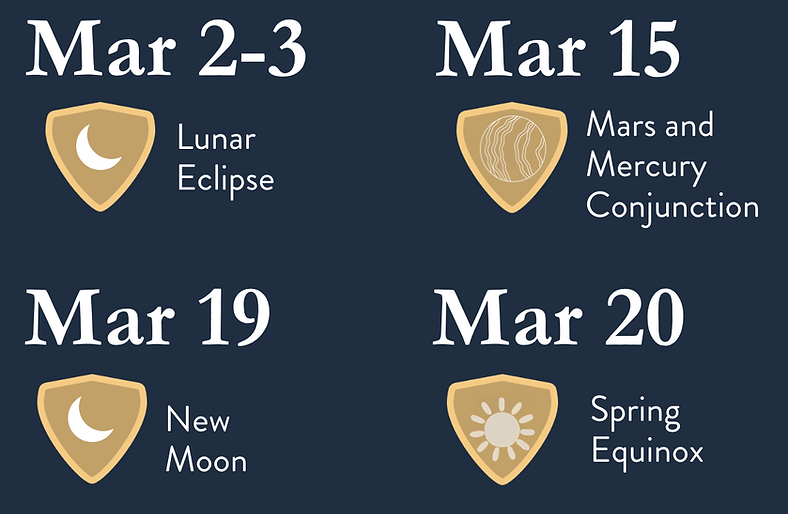
March 2–3 | Total Lunar Eclipse
March's Full Worm Moon passes completely through Earth's shadow, turning a deep, rusty red in what astronomers call a Blood Moon. It's the only total lunar eclipse of 2026, and the last until New Year's Eve 2028. Viewers in western North America will have the best seats, with a front-row view of totality from start to finish. East Coasters can catch the blood-red peak before sunrise cuts the show short.
March 15 | Mars and Mercury Conjunction
Reddish Mars and elusive Mercury appear close together in the sky. This is a rare chance to spot Mercury, which often hides near the horizon and goes unobserved by most skywatchers. Look low in the west after sunset with binoculars for the best view.
March 19 | New Moon
The Moon goes dark, leaving the sky at its blackest for the month. This is prime time for deep-sky observing: galaxies, nebulae, and star clusters pop against the inky background. Schedule a mission tonight for the best views!
March 20 | Spring Equinox & Moon Near Venus
Two reasons to celebrate: the vernal equinox marks the official start of astronomical spring, when day and night are nearly equal in length. At the same moment, a razor-thin crescent Moon hangs close to brilliant Venus in the constellation Pisces shortly after sunset. It's a photographer's dream pairing, and a beautiful way to welcome the new season.
Honorable Mentions
Jupiter is still a brilliant presence in the evening sky following its January opposition. Look for it high overhead after dark, outshining everything except Venus and the Moon. Schedule Slooh missions all month long!
🌷March Quest Guide🌌🔭

As winter gives way to spring in the Northern Hemisphere, March skies offer a fresh set of celestial targets. From seasonal constellations to ancient stellar systems, here are Quests that help you explore both the structure of our galaxy and humanity’s connection to the night sky.
🪱 Wiggling of the Worm Moon: March begins with the Worm Moon 2026 Quest, where you explore the history and meaning behind March's full moon and capture it themselves on March 3, 2026. To be ready for this event, start scheduling missions on February 25, 2026.
☄️ A One-Way Visitor from the Edge of the Solar System: In the Chasing Comet Wierzchos Quest, you investigate Comet C/2024 E1 (Wierzchos), a recently discovered comet traveling on a rare hyperbolic trajectory. That means this icy traveler is just passing through—after its close approach to the Sun, it will leave our Solar System forever. Along the way, students explore what comets are made of, how they differ from asteroids, and why sunlight transforms them into glowing objects with spectacular tails stretching millions of miles across space.
🌸 A New Season of Celestial Gems: With spring arriving in the Northern Hemisphere (and fall in the Southern Hemisphere), it’s the perfect time to begin the Spring–Fall Celestial Gems Quest (High School version/Middle School Version). You capture twelve of the season’s best galaxies, nebulae, and star clusters while learning how to select the optimal telescope and mission time for each object.
📏 Measuring the Cosmos: The Rulers of the Universe Quest turns Slooh’s telescopes into scientific measuring tools. You learn how different telescopes have different fields of view, making some better suited for large objects like nebulae and others ideal for compact targets like planets or globular clusters. By measuring globular clusters, students uncover the relationship between an object’s angular size, its physical size, and its distance—gaining a deeper understanding of how astronomers use geometry to explore the Universe.
✨ Mapping the Milky Way from Within: In the Closest Open Star Clusters Quest, you investigate 25 nearby open clusters to uncover clues about the structure of the Orion Arm—the spiral arm that contains our Solar System. By capturing and analyzing these young stellar groupings, students begin to see how our galaxy’s structure is mapped from the inside out.
🌟 Ancient Cities of Stars: The Closest Globular Star Clusters Quest shifts focus to some of the oldest objects in the galaxy. You capture the 25 nearest globular clusters and explore how their unusual orbits and distribution helped astronomers understand the true structure of the Milky Way. The culminating infographic showcases these dense “stellar cities” and the story they tell about our galaxy’s early history.
These Quests are a powerful way to welcome a new season—connecting cultural history, modern observatories, and the grand structure of our galaxy in one cohesive exploration of the night sky.
Spotlight

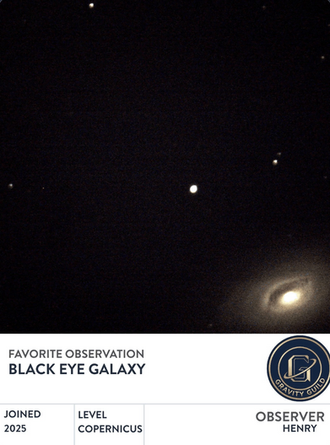
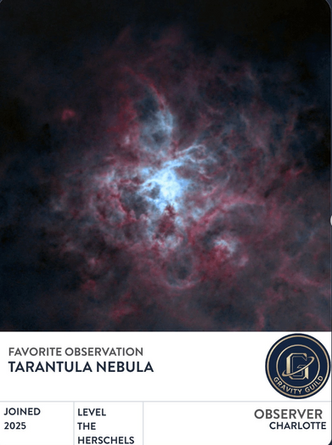
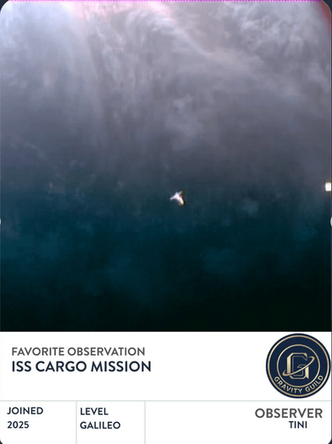
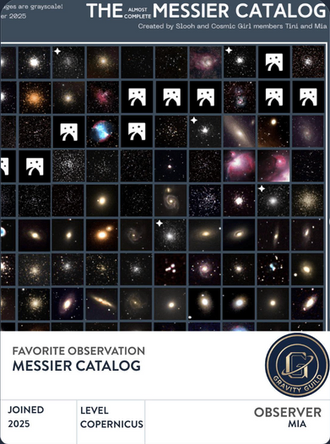
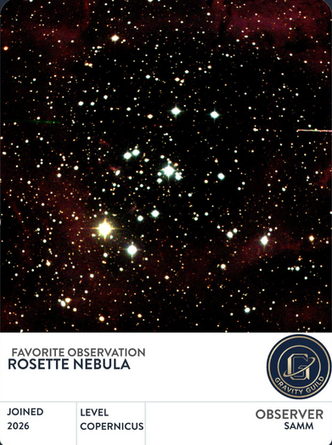
Our spotlight this month shines on our first cohort of Gravity Guild students! Last month, we had our first meeting with the group, and their passion and excitement exceeded all expectations!

We are excited to introduce these students by showcasing their observations below. They are now officially part of a new initiative to amplify the work of our most dedicated student members. The Gravity Guild focuses on learning together, sharing discoveries, and building confidence through science communication. Please join us in welcoming our new members!
Featured Slooh 1000

Keid - Home of Vulcan (40 Eridani)
In honor of Project Hail Mary hitting theaters on March 20th, starring everyone’s favorite Ken, Ryan Gosling, our Slooh 1000 object is 40 Eridani!
40 Eridani is the real star system that serves as the primary setting of the novel Project Hail Mary by Andy Weir, and therefore the setting for the upcoming film. Located just 17 light-years away, this nearby triple star system is even visible to the naked eye under dark skies.
The brightest of the three stars, “Keid,” was adopted by Star Trek lore as the parent star of Spock’s Vulcan. Keid truly does have an exoplanet within the habitable zone, so if a rocky planet and not a gas giant, some Spock-like life may lurk.
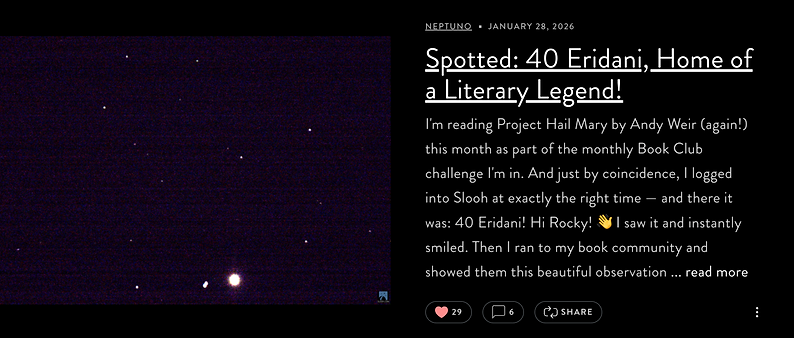
Slooh Member Neptuno posted an amazing observation connecting the star to the novel/movie:
"Spotted: 40 Eridani, Home of a Literary Legend! I'm reading Project Hail Mary by Andy Weir (again!) this month as part of the monthly Book Club challenge I'm in. And just by coincidence, I logged into Slooh at exactly the right time — and there it was: 40 Eridani! Hi Rocky! 👋 I saw it and instantly smiled. Then I ran to my book community and showed them this beautiful observation of our beloved literary extraterrestrial friend. I love how stories connect us with the skies, the same way Contact by Carl Sagan did with Vega, or The Hitchhiker’s Guide to the Galaxy did with Betelgeuse. It’s just a friendly reminder that we really can travel faster than the speed of light — through imagination and adventures."
_________________________________________________________________________
Not yet a Slooh member? Learn more about our monthly memberships and sign up at slooh.com!