
How the University of North Texas Revamped Astro 101 with AstroVenture & Slooh


Introductory astronomy is one of the most popular ways non-science majors meet the universe, but the most exciting parts of the class, a night at the observatory or an hour in the planetarium, have always depended on a clear sky and access to the right facilities. AstroVenture and Slooh address this for both in person or online courses by making intro astronomy courses more engaging and memorable through unique gamification and LIVE online observing experiences. Together they have proven to ignite student curiosity in astronomy regardless of the student’s major or access to on-campus observing.

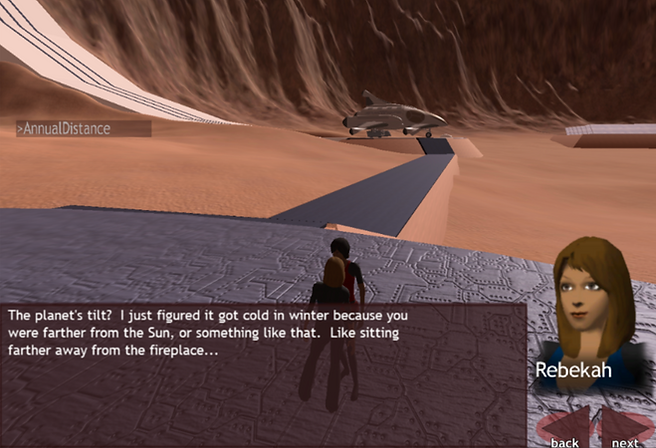
AstroVenture's "University of Mars" presents the full content of a general education astronomy course as an interactive video game, built by Dr. Jane Charlton, Andrew Mshar, and Nahks Tr'Ehnl at Penn State. Students create an avatar and work through mini-games, simulations, and an unfolding storyline that carries them from Mars to nearby stars and out into the wider universe. It covers the basics of the science within the game itself, providing students with a great survey of astronomy in a visual and fun way. Dr. Charlton, who co-designed the game, notes that student reactions have been almost universally positive: the interactive format makes the science more engaging, hard concepts easier to grasp, and the sense of moving through the universe conveys its sheer scale in a way a textbook cannot.
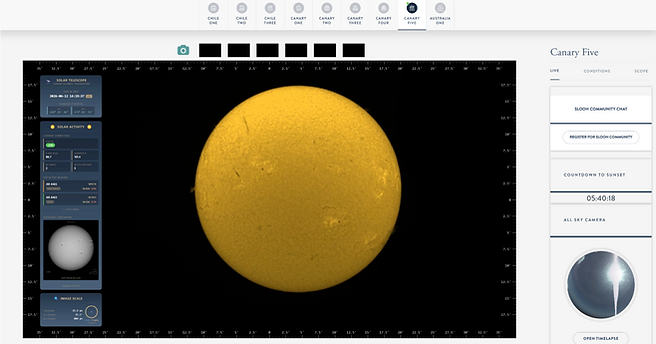
Slooh adds the part a simulation cannot: real data. Through Slooh's network of online telescopes, students capture their own LIVE images of the night sky and complete guided learning activities called Quests tied to what they are observing, while working with their own data. Slooh's telescopes span the globe, offering 24/7 access across time zones and authentic exploration of both hemispheres. Together, AstroVenture's gamified simulation and Slooh's telescopes can bring hands-on astronomy to universities anywhere, especially those without good weather or an observatory of their own.
The University of North Texas has long served large numbers of non-science majors through its solar system and stars courses. Dr. Rebekah Purvis led the charge in bringing both AstroVenture and Slooh to UNT, and over the past few semesters, six+ faculty alongside her have taught with it. Initially, in designing her introductory courses Dr. Purvis felt the course fell short of the real thing: "For me, something was still missing. I had not achieved my goal of giving students an authentic experience in astronomy." That changed after a chance encounter, as she tells it: "AAS Summer 2024: stopped by the Slooh booth and the rest is history." She had already been introduced to AstroVenture and saw the potential in pairing the two.
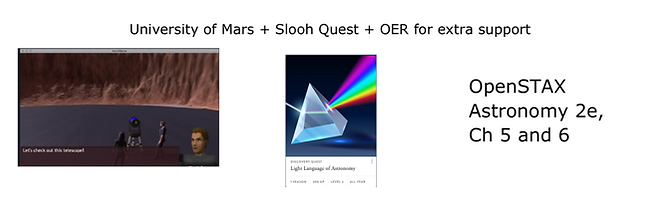
The course is built so that every unit has three parts working in concert: the University of Mars game, a paired Slooh Quest, and an open educational resource for extra support, after which students complete a reflection connected to the storyline and unit exam. The reflections give students a rare chance to be creative in a science class: they choose the modality, whether a video, audio recording, letter, journal entry, comic strip, poetry, or artwork, and share it with classmates. The Slooh Quests sit right alongside the game in the introductory units, so as students learn a concept through University of Mars, they turn to a live telescope to observe the very objects they are reading and playing about. The game provides digestible content for beginners, and Slooh supplies the observational aspect. The model works the same whether a section meets in person or runs fully online.
The result is a course that feels authentic and hands-on rather than passive. Students get to point real telescopes at the sky and bring back their own images, as well as play an interactive video game! Both keep them engaged well past the requirements, with some continuing to log in to Slooh or play AstroVenture long after the course ends. The student feedback speaks to the combination directly:
"Honestly, I loved the Slooh Telescope and the game."
"Slooh Telescopes. I found myself on it all the time. I had pictures of stuff for our final submission back in February from just snapping pictures of anything I found cool."
"I learned that video games can actually be a great tool to learn. I was pleasantly surprised with how much I learned from using the University of Mars game."
"Slooh is a really fun and interesting tool to use. Getting to use live telescopes was a great experience."
"It made me realize how cool space is. I have really gotten the family into looking into space with our own small telescope in the backyard, and it has already made some great memories."
That enthusiasm registers at the department level as well. Ohad Shemmer, another UNT professor who teaches with University of Mars, has said student evaluations make clear they are "loving the University of Mars platform," and that the department is seeing intro-level astronomy enrollment climb back to new highs as a result.
What UNT has shown is that this blend can serve as the backbone of an astronomy course at any institution. Penn State has one of the most popular introductory astronomy courses for non majors in the world and is another great example of Slooh and AstroVenture working well alongside one another. Faculty can structure the two tools together in whatever way fits their course. Some can run the game and Slooh's Quests in tandem for content, unit by unit, as UNT does. Others can let University of Mars carry the core concepts so class time frees up for discussion and demonstration, with Slooh supplying the observation. Others build a fully online asynchronous course around the pairing. UNT's adoption is a working template for that pairing, and it points to a future where any astronomy student, on any campus, can learn the universe through a game and then go observe it for themselves.
To learn more about adopting AstroVenture and Slooh for your introductory astronomy courses, in person or online, contact Anna Paolucci at anna@slooh.com. You can also visit https://www.slooh.com/college-professors & https://theastroventure.com/index.html