School & Jupiter Slip Away! Summer & Venus Step On In!

Updated: May 29
School's wrapping up, Jupiter is slipping out of view, and Venus is stepping in to anchor the summer evening sky. This month, we're heading to the American Astronomical Society meeting to connect with educators and researchers, kicking off a new partnership with NESTA (the National Earth Science Teachers Association), and turning our satellite's attention to the sea on World Ocean Day (June 8), a reminder that Slooh isn't only about looking outward but also about appreciating the blue planet beneath our telescopes. Be sure to try and get some refreshing ocean dips in on June 8th to celebrate for yourself. With longer days, warm nights, and the summer sky opening up overhead, Slooh's telescopes are open all season long and ready for students to do some extra Summer learning!
Slooh X NESTA Partnership
Slooh has officially partnered with the National Earth Science Teachers Association (NESTA), a nonprofit dedicated to supporting Earth and space science educators across K–12. Through this partnership, NESTA members get exclusive access to Slooh. NESTA's mission is to help teachers bring Earth and space science to life in their classrooms, and Slooh gives them a way to do just that. We're excited to welcome NESTA educators into the Slooh community and to support them as they reimagine how Earth and space science is taught.
Summer On Slooh: Start With The Kids Of Slooh Quiz!
For kids, summer is the perfect season to turn curiosity about space into a real hobby, with live telescopes, guided Quests, and a community of stargazers all in one place. Monthly memberships make it easy to join for the summer without a year-long commitment.
Take The Kids of Slooh quiz and find out which of six cosmic identities is your kid's.

Your June Skywatching Guide
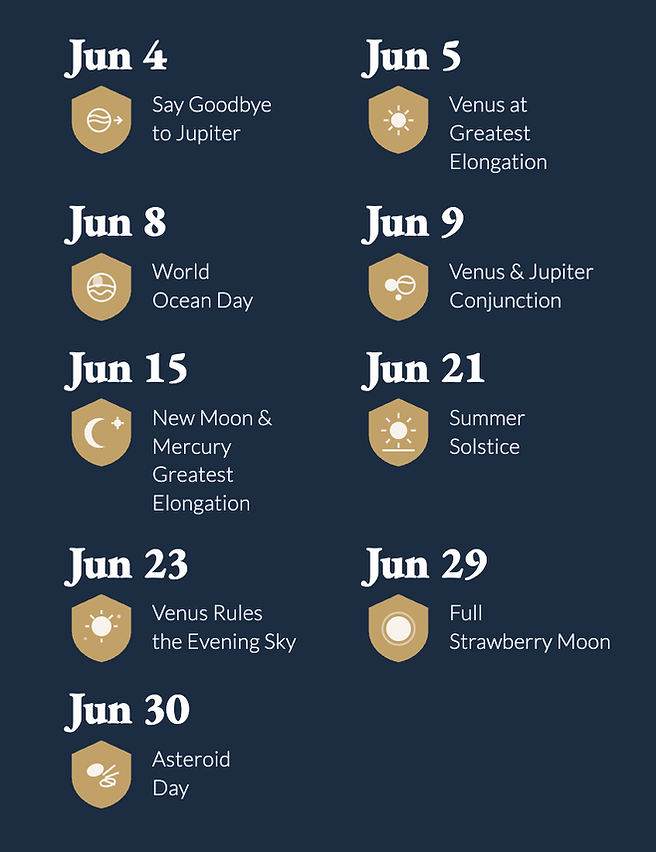
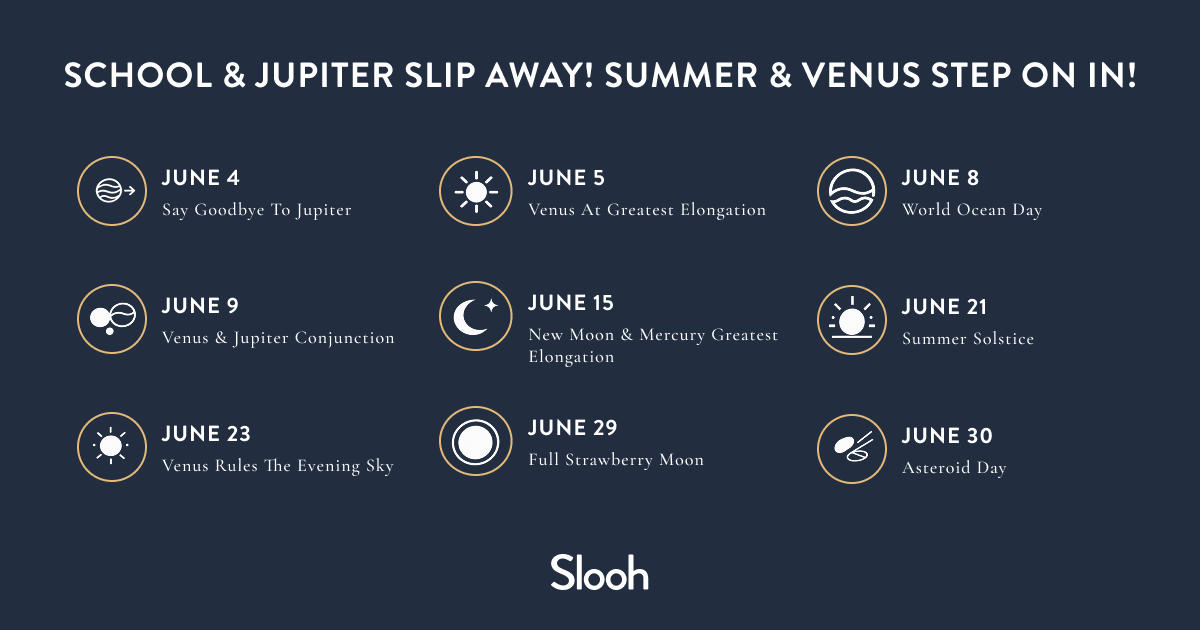
June 4 | Say Goodbye to Jupiter
Jupiter has been a showstopper in our evening sky for months, but the King of Planets is now sinking into the Sun's glare and tonight marks one of the last practical chances to catch it before it disappears until autumn. Point a telescope west just after sunset and give it a proper send-off.
June 5 | Venus at Greatest Elongation
Tonight, Venus reaches its highest point above the western horizon after sunset, making it the most prominently placed it will be all year. No telescope needed, it blazes like a beacon in the twilight sky, outshining every star and planet in view.
June 8 | World Ocean Day
Slooh's satellite imagery offers a stunning reminder that astronomy isn't only about looking outward, it's also about appreciating the extraordinary water world we call home. More than 70% of Earth's surface is ocean, shaping our climate, driving our weather, and making life on this planet possible. That's why initiatives like the Blue New Deal call for putting oceans at the center of climate policy — recognizing that protecting our seas is essential to safeguarding life on Earth.
June 9 | Venus and Jupiter Conjunction
Two of the solar system's brightest planets appear just 1.5 degrees apart in the western sky after sunset, roughly the width of a finger held at arm's length. As a bonus, elusive Mercury lurks between them and the horizon, making this a rare three-planet sighting in a single glance.
June 15 | New Moon + Mercury at Greatest Elongation
The dark New Moon sky is ideal for deep-sky observing, galaxy season is in full swing, so point a telescope toward Virgo or Coma Berenices for spectacular views. On this same night, Mercury reaches its greatest eastern elongation, sitting at its highest point above the western horizon after sunset and offering one of the year's best chances to spot the solar system's most elusive planet.
June 21 | Summer Solstice
The longest day of the year arrives today as the Sun reaches its highest point in the sky and summer officially begins. The short nights mean less darkness for stargazing, but the warm weather and bright evening planets make for perfect outdoor sessions.
June 23 | Venus Rules the Evening Sky
With Jupiter gone from view, Venus takes the stage alone as the undisputed standout of the evening sky, strikingly high in the west after sunset and visible for a generous window each night. If anyone points to a bright "star" low in the evening sky this month, the answer is almost certainly Venus.
June 29 | Full Strawberry Moon
June's full moon takes its sweet name from Indigenous traditions marking the peak of strawberry season, also known as the Rose Moon or Honey Moon. This month it's also a Micromoon — near its farthest point from Earth — appearing slightly smaller than average, but rising in a warm golden hue that's hard to miss.
June 30 | Asteroid Day
Observed each year on the anniversary of the 1908 Tunguska impact, Asteroid Day is the UN-sanctioned day of global awareness about near-Earth objects and planetary defense. A great conversation starter with students about the scientists working to protect our planet.
June Quest Guide

June brings warm evenings, bright constellations, and some of the shortest nights of the year in the Northern Hemisphere—making it the perfect time to explore the summer sky. Here are some Quests to help students kick off the season with discovery and creativity.
🚀 Your Launchpad to the Universe: The Slooh Tutorial Quest introduces members to everything they need to begin exploring with Slooh. From navigating Quests and scheduling Missions to capturing telescope images and posting observations, this Quest serves as the perfect starting point for new members ready to begin their journey through the cosmos.
🍓 Under the Strawberry Moon: June's full moon takes center stage in the Strawberry Moon Quest, where members explore the meaning behind this seasonal lunar name and capture it on June 29, 2026.
☀️ Celestial Gems of Summer and Winter: As summer begins in the Northern Hemisphere and winter settles into the Southern Hemisphere, the Summer–Winter Celestial Gems Quest (High School version/Middle School Version) invites members to capture twelve of the season’s best galaxies, nebulae, and star clusters from Slooh’s observatories around the world, while learning how to select the optimal telescope and mission time for each object.
🌌 Searching for Our Galactic Twin: In the Milky Way Doppelganger Quest, members venture deep into space to find a galaxy that resembles our own Milky Way. Along the way, they’ll learn about galaxy structure, deep-space observation, and why our galaxy is just one among countless others in the Universe.
🦁 A Sanctuary Among the Stars: The Celestial Wildlife Sanctuary Quest transforms the night sky into a cosmic safari. Members capture celestial objects connected to animals while building their own “wildlife sanctuary” of their captured images. Along the way, they’ll learn about animal-inspired constellations and complete a celestial scavenger hunt.
🌙 Legends of the Inca Moon: In the Mama Quilla, Inca Moon Quest, members explore ancient Inca lunar myths and traditions. Through storytelling and telescope observations, they’ll discover how different cultures interpreted the Moon’s dark regions, lunar phases, and celestial events long before the modern age of astronomy.
These Quests are a wonderful way to begin the summer season by blending astronomy, storytelling, exploration, and creativity under June’s night skies.
Spotlight

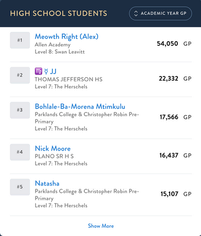
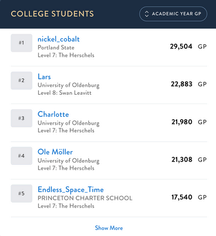
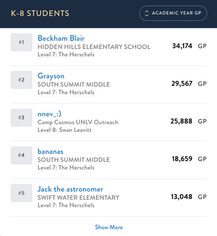
The school year is wrapping up, and we're shining the spotlight on this year's top Gravity Point earners!
Cheers to the college, high school, and K–8 students who went above and beyond on Slooh in 2025–26 — completing Quests, scheduling missions, sharing observations, and earning their place among our Gravity Awards stars. Stay tuned for a showcase this Summer highlighting the achievements of all our Gravity Award winners!
Learn more about the Gravity Awards and explore the leaderboard here.
Featured Slooh 1000

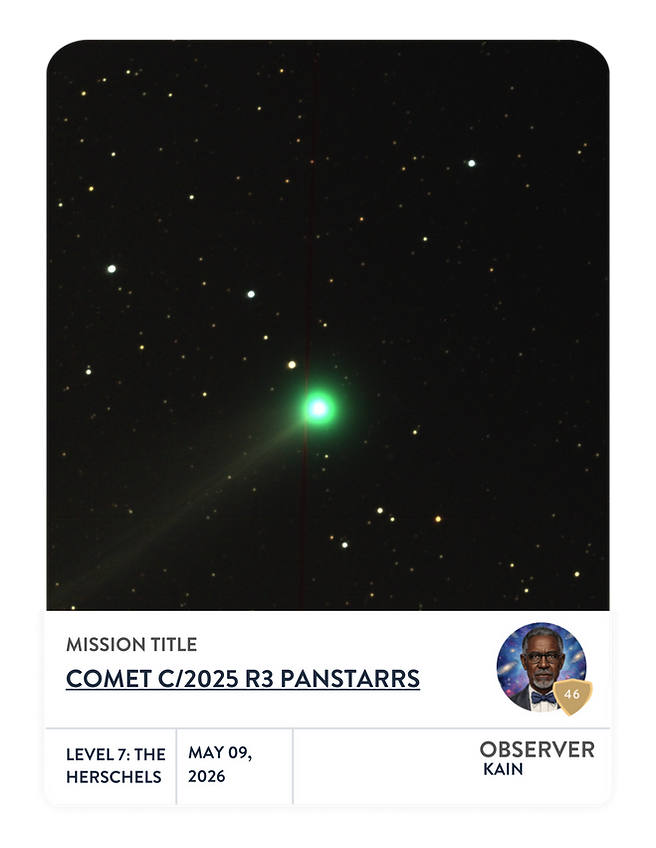
It's your last opportunity to capture Comet C/2025 R3 PanSTARRS (C/2025 R3) before it's gone from the Slooh 1000 in mid-June.
Discovered on 8 September 2025 by the Pan-STARRS survey, C/2025 R3 is a hyperbolic visitor from the Oort Cloud that reached perihelion on 19 April 2026 at about 0.5 AU from the Sun, before heading back out of the Solar System on an escape trajectory.
Schedule your mission before it's too late!
Not yet a Slooh member? Learn more about our monthly memberships and sign up at slooh.com!