
The Search For the Search For Life–And Planet Parades
.png)
EDITOR'S NOTE
This post was written by Tini, a member of Slooh's Gravity Guild — a select group of student ambassadors from around the world who are passionate about astronomy and space exploration. Guild members use Slooh's robotic telescopes to observe, learn, and share their discoveries with the broader community. We're proud to feature their voices here on the blog, bringing fresh perspectives on what's happening in the night sky. Take it away, Tini!
Written by Tini, Spring 2026 Slooh Gravity Guild member and Aspiring Astronaut
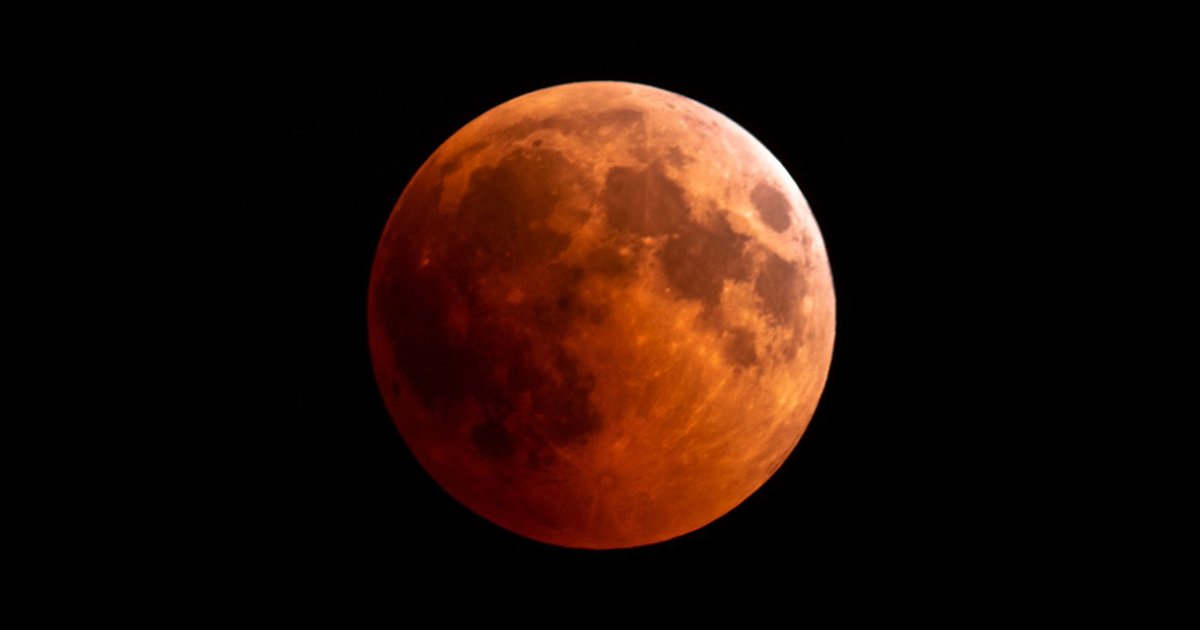
As February came to its end with the Blood Moon on the horizon, there was a last surprise from the night sky, February 28th marked a spectacular “6-planet parade”, where Jupiter, Saturn, Neptune, Uranus, Venus, and Mercury are above the horizon right after sunset.
Looking to the Western horizon half-an-hour after sunset, you could be able to see three of these planets (Saturn, Venus, and Mercury) visible to the naked eye!
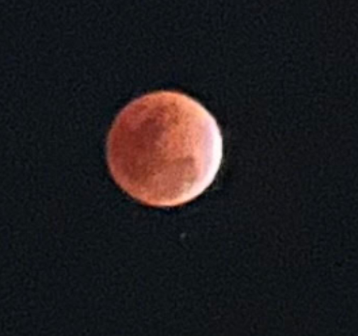
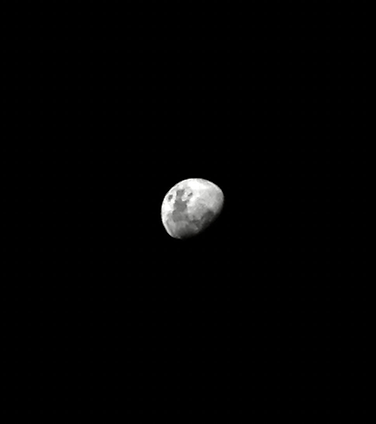
Jupiter was also in a conjunction with the Waxing Gibbous Moon in March, so it was ready to be captured during the total Lunar Eclipse on March 3rd as well! Not to mention all the other conjunctions coming up in March. The last planetary parade like this was in February last year, and we’ll likely not see a planetary parade like this for a couple of years.
There are challenges, however. Since Venus, Mercury, and Saturn, though bright, disappear below the horizon early this month, you most likely need binoculars, a telescope, a completely clear view of the Western horizon, and “likely, a healthy dose of imagination.” (space.com news)
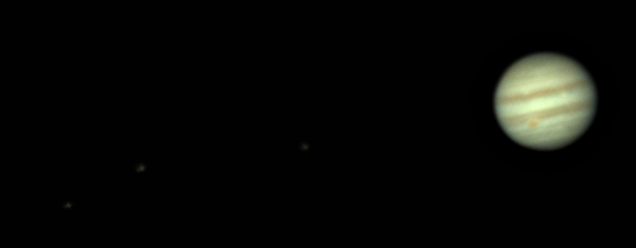
In fact, all of these planets except Uranus and Neptune are not currently visible through Slooh telescopes due to their proximity to the horizon, which could sacrifice image quality for air turbulence, or what I like to call “Soft Horizon Syndrome”. So, I’m excited to see if any Sloohvians managed to capture these planets using naked eye astronomy! Even if not possible, it’s worth knowing that such a cosmic event is happening right above our heads.
A Deeper Question
And no, before you ask, the answer is not 42.
As we are trying hard to take photos of these worlds and reading the news about the wave of spacecraft such as the Habitable Worlds Observatory and Pandora, looking beyond the orbits of Neptune for exoplanets, have you ever thought how to find life 101? I’m reminded of the same remark given in a NASA DARES webinar, though with more formal NASA jargon:
How Do We Standardize the Search for Life Outside Our Solar System?
Answering this question is far from easy, but some things can point us in the right direction. We might never find “the way”, but we can definitely appreciate the number of parameters put into such an effort.
- Habitable Zone
- The area around a host star where liquid water can exist on a planet’s surface. It isn’t a main point fixed in space, though, it mainly depends on the host star of the system. From its surface temperature, its evolution, etc.
Though, only knowing whether a planet is in the Habitable Zone or not doesn’t define the habitability of a planet. If you think about it, Europa could have life under its oceans, despite it being way out. Mars could’ve been habitable if it didn’t lose its atmosphere. This is also why learning from our own Solar System is crucial for looking beyond.
- The System Itself
- Although the host star might be the “star” of the system (pun intended), Earth might not be how it is now without the asteroids that bombarded it billions of years ago, nor without its characteristic 23.5-degree tilt. Interpreting the habitability of an exoplanet needs to account for the orbits, system formation, and the planet’s properties itself. Even its moons can affect the magnetic field and tidal behavior.
- Biosignatures
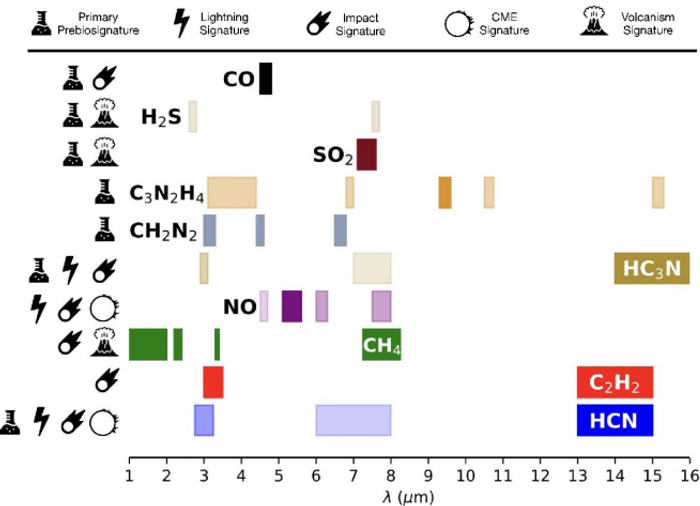
- Anything that is a sign of present or past life is a biosignature. It’s not just the gases you can find when doing spectroscopy on Slooh, but also surface biosignatures (features on the planet’s surface), temporal biosignatures (changes in the atmosphere or surface), and technosignatures (unnatural signs of life that can only be made by civilizations, such as Chlorofluorocarbons)
Remarks
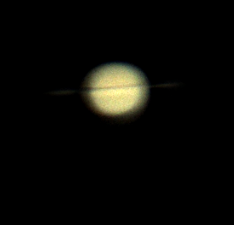
Whether it’s a planet of our Solar System or perhaps a planet of someone else’s Solar System, we’re always looking up, wondering, and capturing the seemingly impossible. Even if it’s Saturn near the sunset. Or an exoplanet silently transiting its host star. How would you search for “The Search of Life”?
As always,
Clear Skies
Images are from Stellarium, scheduled Slooh telescope missions, and from an iPhone 14 Pro
Sources (excluding general definitions):
https://astrobiology.com/2024/04/an-overview-of-exoplanet-biosignatures.html