May Flower Moon, Micro Moon & More Moon Joy!

Updated: May 1
Happy May Slooh members! We hope you have been having a blast choosing your avatars, inputting your interests, and sharing your progress each week from the weekly digest emails! We can't wait to keep adding more for you all to keep elevating your experience on Slooh. We're kicking off May with an announcement we've been waiting a long time to share, and then handing the sky back over to you, because this month has a lot going on up there.
We're thrilled to welcome Dr. Moriba Jah, MacArthur Fellow, UT Austin professor, and one of the world's leading voices on space sustainability, to Slooh's Board of Directors. Alongside his appointment, Slooh and UT Austin have signed an agreement to integrate ASTRIANet, Dr. Jah's telescope network for space domain awareness, into the Slooh platform, giving our community the ability to observe and track satellites and orbital debris in real time, something that has never before been accessible to the general public.
Once in a Blue Micro Moon
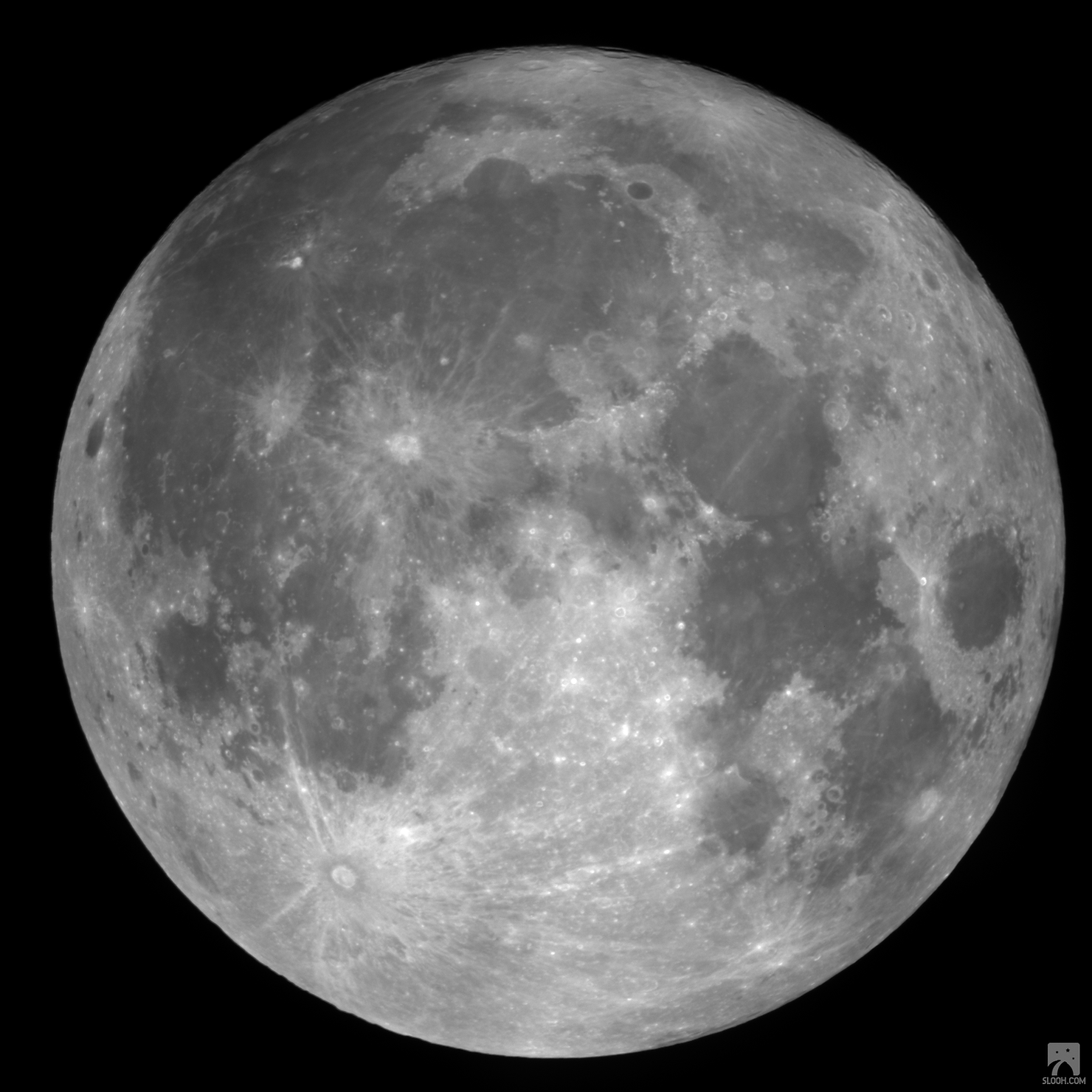
May 30th brings us a Blue Micro Moon, the second full moon of the month, and at its farthest point from Earth, making it appear smaller and more mysterious than usual, like the moon is playing a little hard to get. Slooh is throwing a Star Party in its honor. Before we gather under that glowing orb together, we want to know: what does moon joy do to you?
Does it make you want to write something? Draw something? Sing something quietly to yourself in the backyard? Does it make you feel ancient and small and somehow also enormous? Does it make you think of the ocean, or your grandmother, or a dream you once had? Does it just make you really, really happy to be alive on a planet with a moon?
What We're Looking For:
Absolutely anything! Poems, paintings, short stories, photographs, collages, songs, doodles on napkins, data visualizations, haikus, illustrations, tiny essays, moon journals — if the moon whispered it into existence, we want to see it. There are no rules about medium, style, or format. There is only one requirement: moon joy must be present.
Your May Skywatching Guide
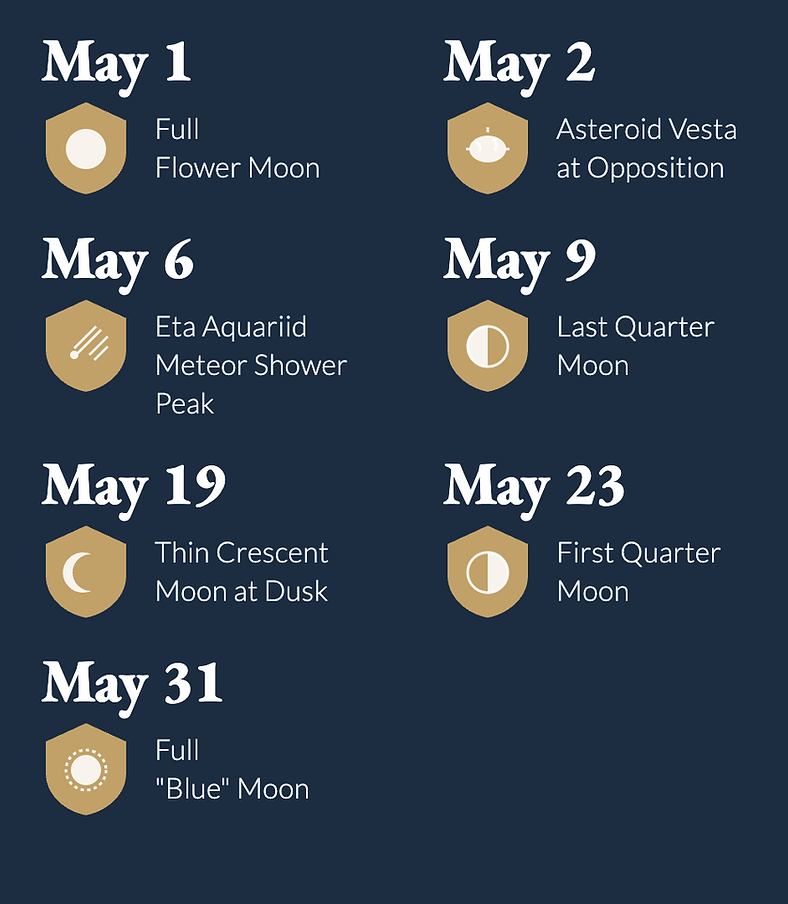
May 1 | Full Flower Moon
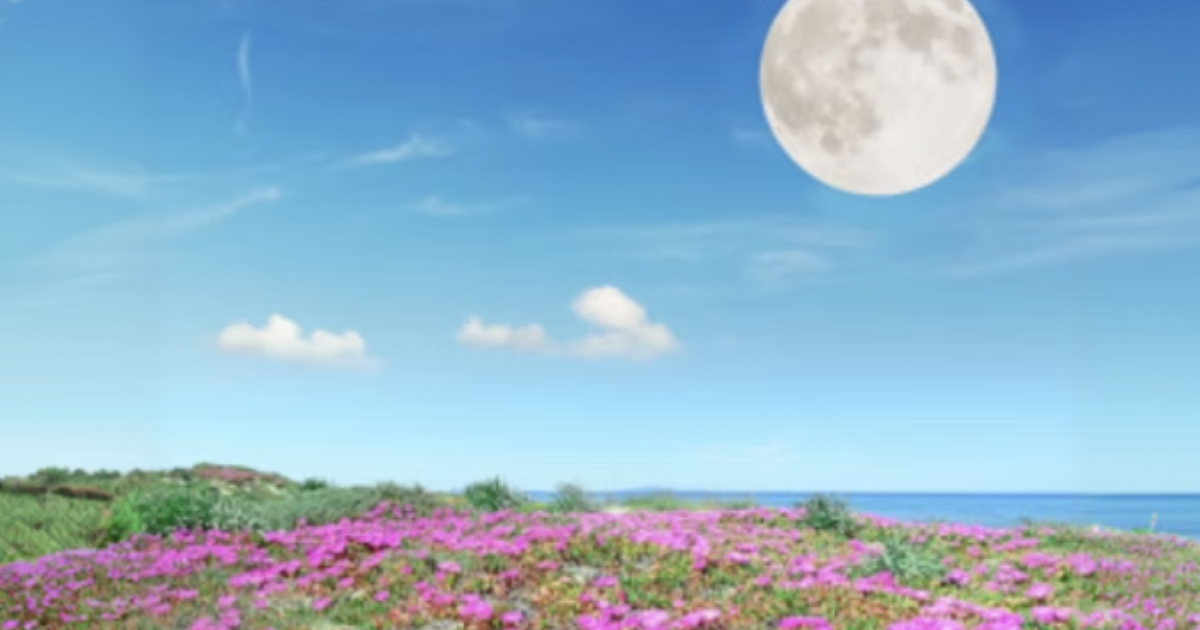
May's first full moon rises in the constellation Scorpius and carries the traditional name Flower Moon — a nod to the abundant blooms of late spring across the Northern Hemisphere. A perfect opportunity for detailed lunar imaging before the night sky opens up for deep-sky work later in the month.
May 2 | Asteroid Vesta at Opposition
Asteroid Vesta reaches opposition on May 2nd, meaning it's at its brightest and most visible of the entire year. While it remains too dim for the naked eye under most skies, it's easier to spot with binoculars or a telescope— making this a great moment for a Slooh mission. Vesta is one of the largest objects in the asteroid belt and one of the few rocky worlds we've visited with a spacecraft (NASA's Dawn mission). See if you can track it!
May 6 | Eta Aquariid Meteor Shower Peak
Every year in early May, Earth passes through a stream of debris left behind by the most famous comet in history — Halley's Comet. The result is the Eta Aquariid meteor shower, one of the most consistently active showers of the year. The radiant rises in the pre-dawn eastern sky, and while Northern Hemisphere observers get a more modest show than those in the Southern Hemisphere, patient early risers can still catch a respectable display.
May 9 | Last Quarter Moon
The Moon reaches its last quarter phase, rising around midnight and setting around noon. With the Moon out of the early evening sky, the nights of early May are among the darkest of the month — ideal for deep-sky imaging of galaxies and nebulae. Galaxy season is still in full swing. Schedule a mission.
May 19 | Catch the Thin Crescent Moon at Dusk
Just a day or two after new moon, a whisper-thin crescent hangs low on the western horizon just after sunset — one of the most beautiful and fleeting sights the sky offers. The young Moon's unlit portion may glow with a soft blue-gray light called Earthshine (or the "Da Vinci glow"), where sunlight reflected off Earth briefly illuminates the shadowed lunar face.
May 23 | First Quarter Moon
The Moon reaches first quarter, presenting its half-lit face to the sky. This phase is one of the best for lunar observation — the terminator line (the boundary between light and shadow) runs across the surface at a dramatic angle, throwing craters, mountains, and ridges into sharp three-dimensional relief. Point any telescope at the Moon tonight for a geography lesson you won't forget.
May 31 | Full "Blue" Moon
May closes with something genuinely rare: a second full moon in a single calendar month — the definition of a Blue Moon. The Full Moon on May 31 will also be the smallest of the year, appearing about 5.5% smaller than an average Full Moon — a Micromoon — because the Moon will be near its apogee, the farthest point from Earth in its orbit, making it appear about 5.5% smaller and 10.5% dimmer than a typical Full Moon. Register for our Star Party!
May Quest Guide

May brings longer evenings, blooming landscapes, and a rare lunar treat—two full moons in a single month! It’s a great time to explore both the beauty of the night sky and the science behind it. Here are some Quests to inspire discovery this month.
🌸 Under the Flower Moon: May begins with the Flower Moon Quest, where members explore the meaning behind May’s full moon and capture it on May 1, 2026. Named for the abundance of spring blooms, this full moon is a perfect introduction to seasonal skywatching.
🔵 A Rare Blue Moon: Later in the month, members can take on the Blue Moon Quest and capture May’s second full moon on May 31, 2026. Along the way, they’ll learn why two full moons can occur in a single month and what makes a "blue moon" such a special event.
🎂 A Star for Every Birthday: The Birthday Star Quest connects members personally to the cosmos. By identifying and capturing a star whose light began its journey the year they—or someone they know—were born, members turn astronomy into a meaningful, creative project with a custom birthday card.
🌌 Exploring Cosmic Clouds: The Nifty Nebulae Quest invites members to explore some of the most stunning objects in the night sky. From glowing emission nebulae to mysterious dark nebulae, members will capture and investigate these diverse celestial structures and learn what makes them so unique.
🌱 Farming Beyond Earth: In the Growing Plants on the Moon Quest, members explore what it would take to sustain life beyond our planet. After capturing their own image of the Moon, they’ll investigate the challenges of growing plants in a lunar environment and design their own habitat for future explorers—something to think about as the Artemis mission eventually constructs the Artemis Base Camp. While this Quest is designed for elementary student-members, any member would enjoy and learn something from it.
🌌 Ancient Skies of the Inca: The Dark Constellations of the Inca Quest takes members more than 500 years into the past to explore how ancient South American cultures interpreted the night sky. By capturing over 20 southern-sky objects, members discover how cultural astronomy reveals timeless connections between humanity and the cosmos.
Spotlight

Slooh Members Capture Artemis II
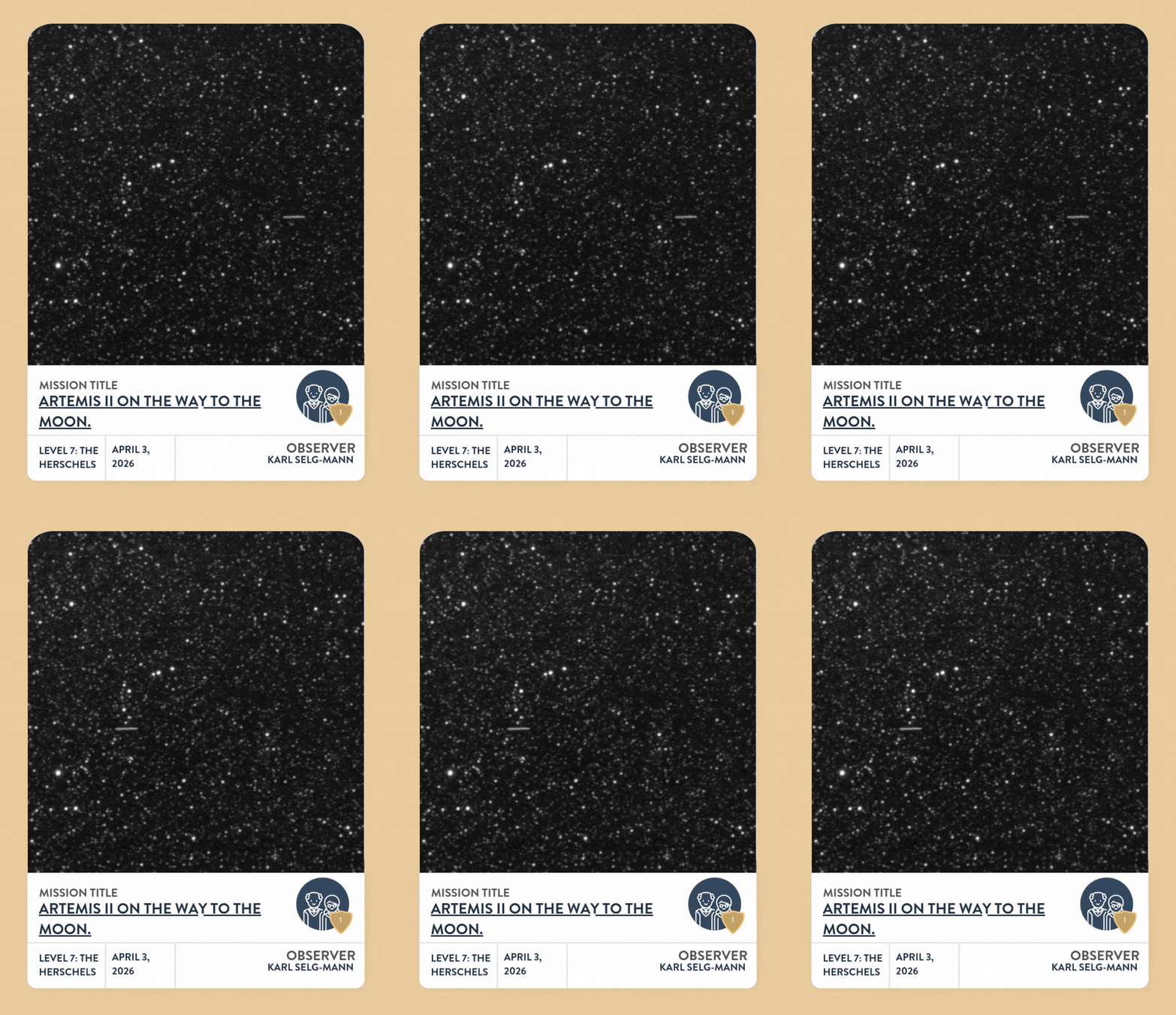
Humans are going back to the Moon, and Slooh was watching. When NASA's Artemis II spacecraft made its journey, members turned Slooh's telescopes to do something remarkable: track it themselves. The results speak for themselves. Karl Selg-Mann put together an animation that makes the whole thing feel exactly as extraordinary as it is...a tiny point of light carrying four people toward the Moon.
Karl Selg-Mann's observation said, "Artemis II on the way to the Moon.
The spacecraft at around 17:50 UTC on Thursday, April 2, 2026, during High Earth Orbit phase. According to the flight plan, the Astronauts were sleeping. The flipbook consists of four 20s luminance exposures, taken with Slooh Australia One telescope."
Featured Slooh 1000

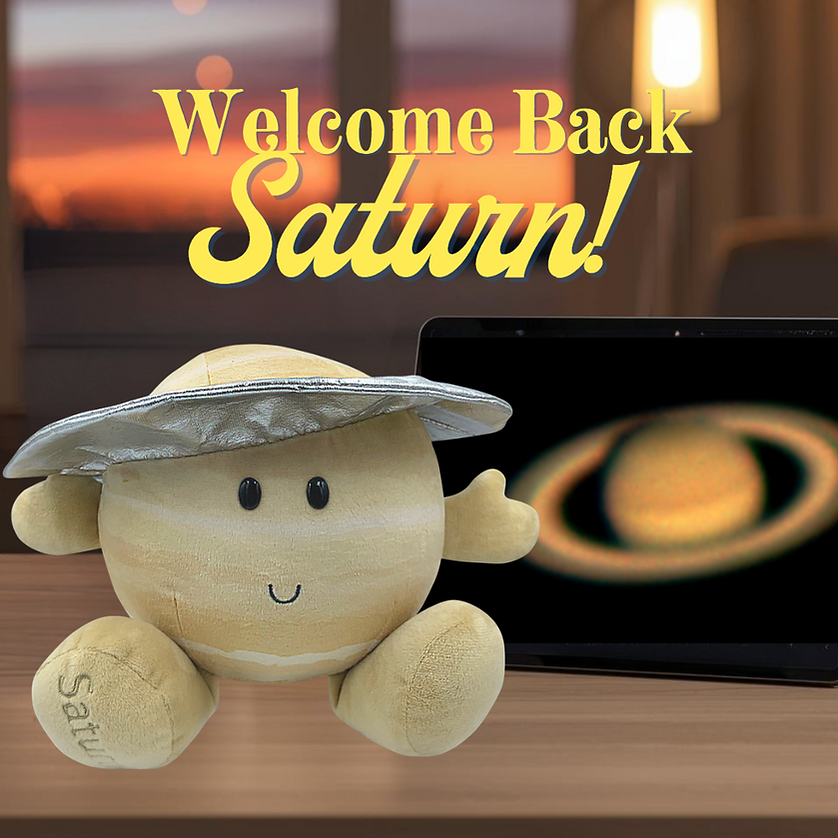
Saturn Returns to Pre-Dawn Skies
The second largest planet in the solar system, more than 60 moons are known to orbit this ringed gas-giant. Among them, Titan's liquid methane lakes exhibit tides; and Enceladus has a subsurface ocean that may harbor life.
Early risers, your patience is about to be rewarded. Saturn is climbing back into the pre-dawn sky this month, rising in the southeast in the hours before sunrise. It's faint at first, a steady, golden-white point low on the horizon, but it's unmistakably Saturn, and it's only going to get better from here as the planet climbs higher through the coming months.
Schedule your mission to Saturn!
Not yet a Slooh member? Learn more about our monthly memberships and sign up at slooh.com!