
Slooh Community Recognitions: Honoring Our Members
.png)
At Slooh, we believe the universe belongs to everyone—and that belief comes alive through the extraordinary members who make our community what it is. Night after night, they share their wonder, teach one another, and push the boundaries of what astronomy can achieve.
This year, we're honored to recognize a remarkable group of community members whose dedication, knowledge, and generosity have shaped the Slooh experience in profound ways. From hosting weekly programs to capturing breathtaking images, from sharing cultural stories woven through the cosmos to simply showing up every single day—these individuals embody the spirit of exploration and connection that defines our mission.
Their favorite observations, shared in their own words, reveal not just technical achievements but deeply personal moments of discovery. Each one tells a story about what draws us to the night sky: the awe of ancient supernovae, the patience required to piece together a mosaic of Andromeda, or the daily ritual of watching our Sun's ever-changing face.
Join us in celebrating these exceptional members of the Slooh community!
For two years, Keith co-hosted the "Tuesdays at 8" program alongside Gretchen, serving as a cornerstone of a popular weekly member event. His dedication extends to creating and presenting the Astro Camp series of classes, hosting members-only star parties, and contributing his expertise to our public broadcasts. Keith has a remarkable ability to present complex astronomical concepts clearly and easily, making them accessible to all. His steady presence and expert guidance have enriched the Slooh community in countless meaningful ways.
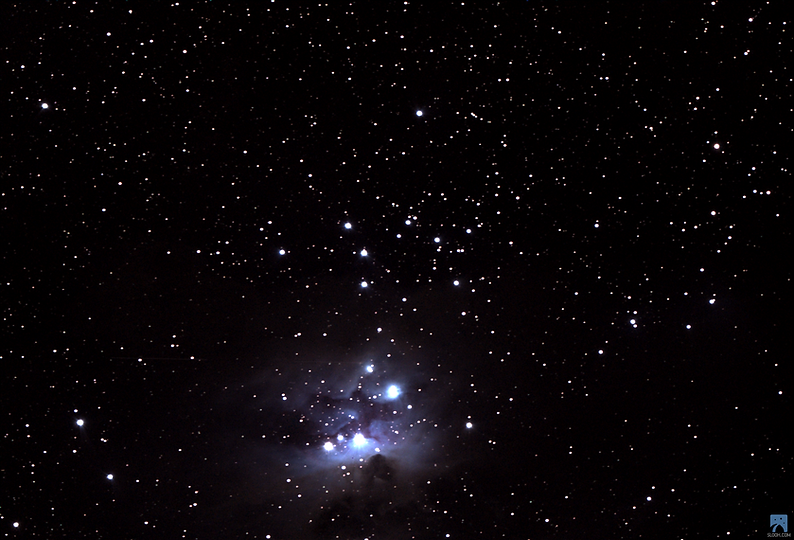
"Each open cluster is special in its own way, but I think that all of us have a couple of favorites that we keep in mind, and that we visit again and again. For me it is this one. NGC 1981. It can be found just above its much more famous neighbor, NGC 1977, the running man. I chose Canary Three for this mission, to get them both in the same field of view, and the results are stunning. A perfect example of using the slooh telescopes to see something, going outside to find it, seeing something else, and scheduling a slooh mission to observe it. I see many images and observations of the running man, but few which pay homage to this delightful cluster of stars just above. This is one of them."
Milton is recognized for his generous contributions to providing Astro Camp classes in Spanish and for his repeated appearances as a special guest at both member and public star parties. His extensive knowledge is impressive, but it is the cultural richness he brings - the history, traditions, and stories interwoven with astronomy - that truly distinguishes his presence. The Slooh community is grateful for the unique perspective Milton shares with its members.
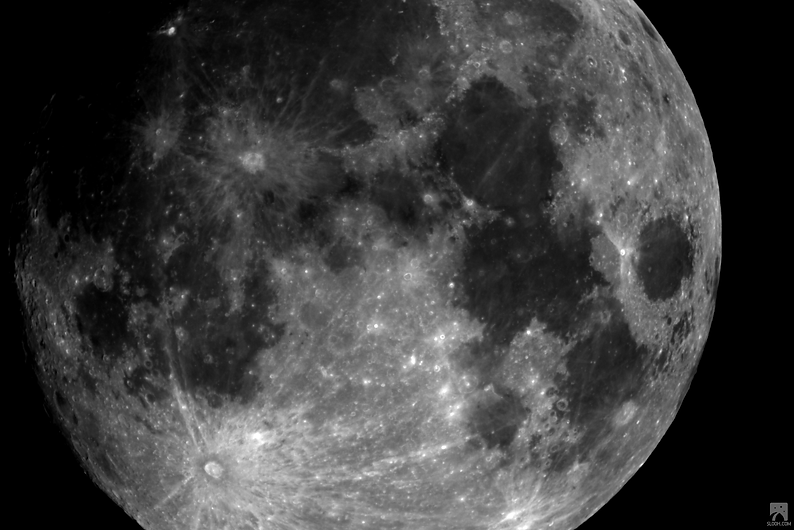
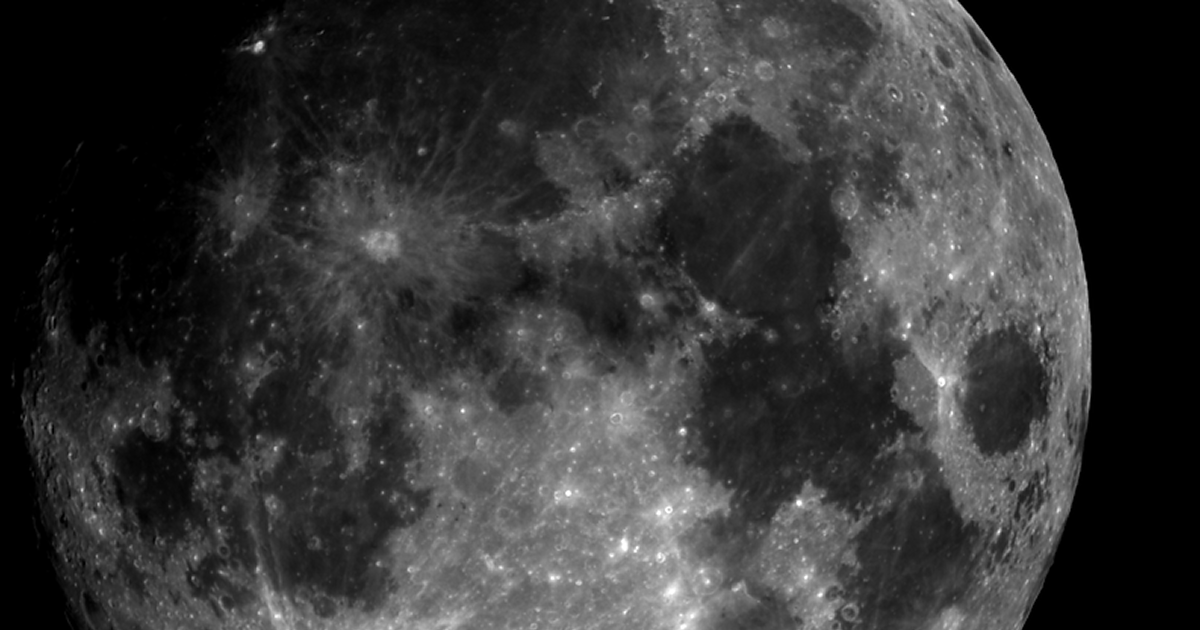
"The splendor of Tycho: One hundred and eight million years ago, very recently in space terms, our moon suffered an impact that would leave a scar so big that rays of ejected material blanketed a big part of the moon's southern hemisphere. The impactor is calculated to have been 8 to 10 Km wide and the punch so hard that material from the moon may have reached the Earth a few days later."
Carol is honored for her unwavering dedication to expanding Slooh’s reach and spirit. Through her leadership of the Women in Space Facebook group and her strong connection with the Cosmic Girls community, she ensures Slooh remains at the forefront of engagement. Carol’s advocacy and enthusiasm help make space exploration accessible to more people, encouraging a sense of belonging within the field.
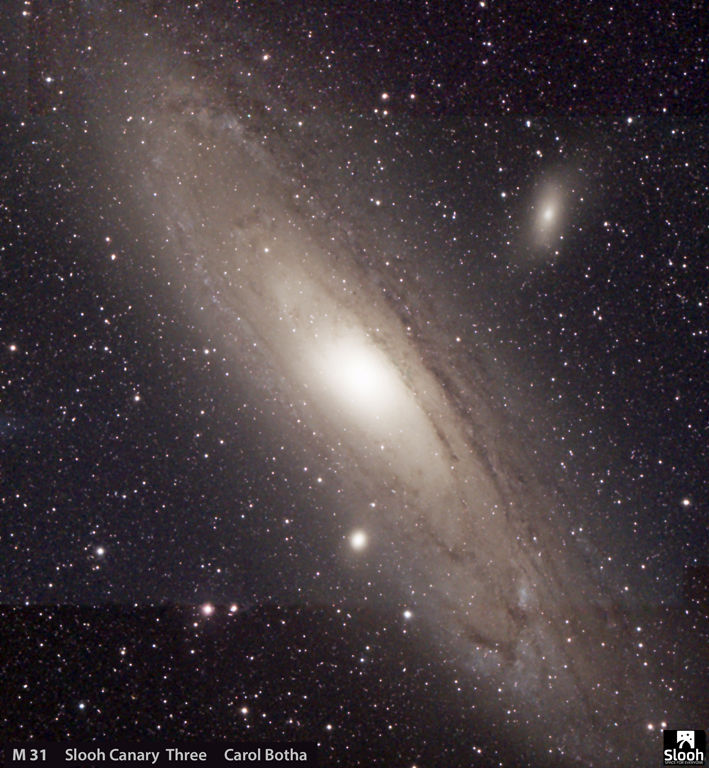
"I can't believe this is my Andromeda. So sorry Canary Three that I have not been giving you the attention that you deserve. Thanks to Jarmo Ruuth's Astro mosaic planner I could add on the northeast/southwest bits with the bluish star cluster regions. Although my overlaps are still slightly visible, I am so excited. Many years ago when I observed and sketched Andromeda for the first time, I never dreamed that I would be able to see the galaxy like this!"
Holdrost is recognized for his ongoing commitment to hosting the Sunday Space Chat and curating thoughtful, engaging, and diverse content. His curiosity, preparation, and steady presence have made Sunday Space Chat an engaging gathering place for members. Through his efforts, Holdrost has fostered a welcoming environment where learning and discovery naturally flourish.
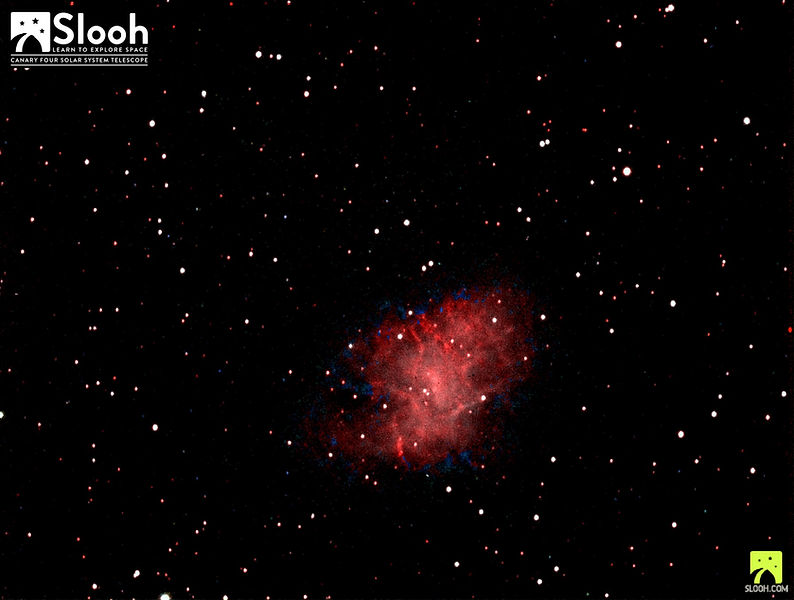
"Ir's Birth Was So Bright, You had to Wear Shades
This is truly one of my favorites as I was born under the sign of the Crab. But that's not where this supernovae remnant is located. Instead of Cancer, it is found in the constellation of Taurus the bull. It is an historical super-star in it's own right! Why?.., Here 's this small bit from Wikipedia--
Recent analysis of historical records have found that the supernova that created the Crab Nebula probably appeared in April or early May, rising to its maximum brightness of between apparent magnitude −7 and −4.5 (brighter than everything in the night sky except the Moon) by July. The supernova was visible to the naked eye for about two years after its first observation."
Mark MacInnes and Jenny McLachlan
Mark and Jenny are honored together for their extraordinary consistency and devotion to the Slooh community. Rain or shine, they show up daily on the Discord Sun channel, using the Slooh Solar Telescope to share real-time views, updates, explanations, and insights into active solar regions, filaments, and evolving solar activity. Their enthusiasm and reliability keep countless members connected to the living, dynamic nature of our star.
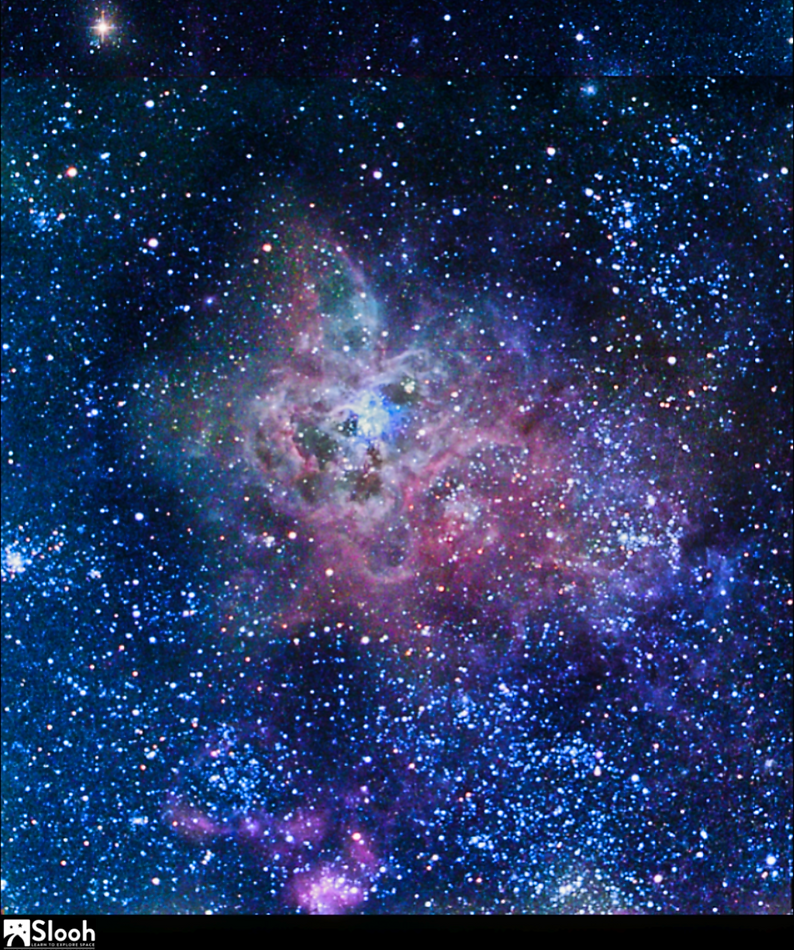
"Tarantula Nebula: What is Incubating in the Nest and Environs?
This image is a composite of a photo taken in July with that of a recent mission. The resulting fov is a rectangle of about 65’ x 43’. Processing emphasized the dense star fields that give evidence of many extremely active starbursts! Astronomers surveys have estimated that this starburst nebula is the largest star forming cloud among all of the local group of galaxies! It is about 170 KLy away in the Large Magellanic Cloud! My expectation is that the continuing generation and merger of star clusters may produce - one day - a new LMC globular cluster to add to its repertoire of young GCs! A Hubble ST study of the collision of just the two clusters at the very center of the Tarantula is shown in PART 2."
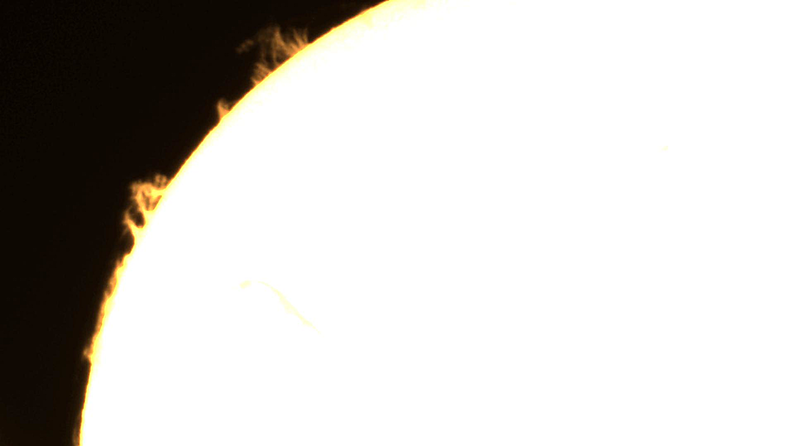
"NE Prominences 2023 November 16
Slooh Canary Five Solar Telescope views from livestream of Sun have provided consecutive days of NE solar prominences from solar activity beyond the east solar limb, leaving us curious about what lies beyond that will emerge into view and when it will arrive. I look forward to the shape, size and patterns formed by solar prominences we are able to observe on Our Sun from the Slooh Solar Telescope. Some prominences are of short duration and others linger longer.
Sun views on November 16 began with three active sunspot regions AR3486 in SW, AR3487 in SW and AR3488 in NE, but AR3488 changed status and became H-alpha plage without sunspots.
Image captured on Thursday, November 16, 2023 at 11:42 UTC."
Shawn is recognized for his dedicated efforts in keeping the Libra House vibrant, active, and endlessly engaging. He consistently collects and shares stories, news articles, and historical insights that span ancient, medieval, and modern perspectives. By weaving together rich context with current astronomical happenings, Shawn adds a distinctive depth to every conversation. His ongoing contributions enrich the Slooh community and elevate the experience for everyone involved.
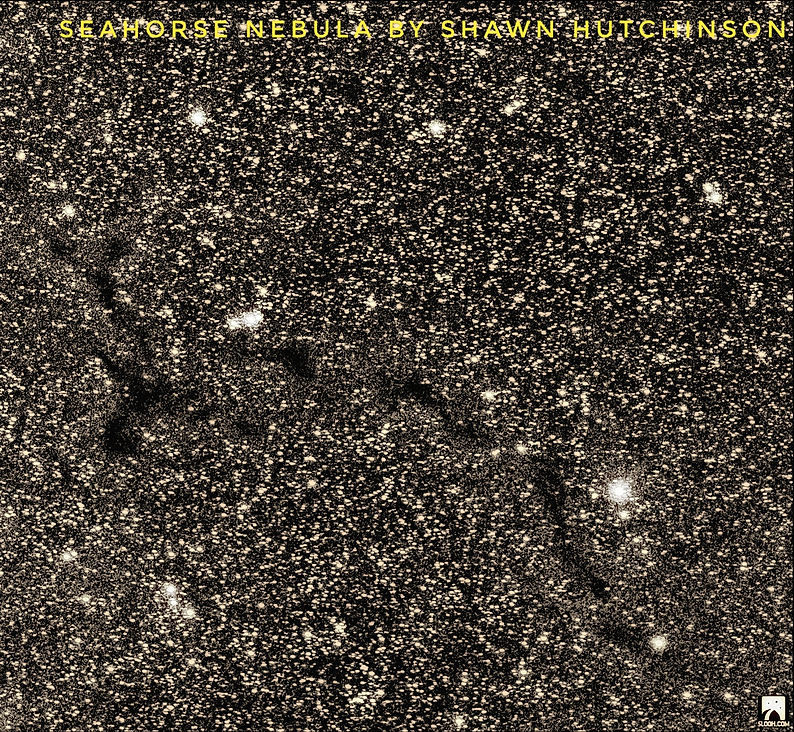
"Seahorse nebula
The Seahorse Nebula, also known as Barnard 150 (B150), is a dark nebula located in the constellation Cepheus. It's a striking region of interstellar dust that obscures the light from stars behind it, giving it a seahorse-like appearance. Dark nebulae like B150 are composed of dense clouds of gas and dust, which can eventually collapse under their own gravity to form new stars. The Seahorse Nebula is a popular target for astrophotographers due to its distinct shape and the contrast it creates against the background of stars. Image was taken on Slooh Canary Islands #3 telescope."