
Where in the World Are Slooh's Telescopes? Meet Our World-Class Observatory Partners
.png)
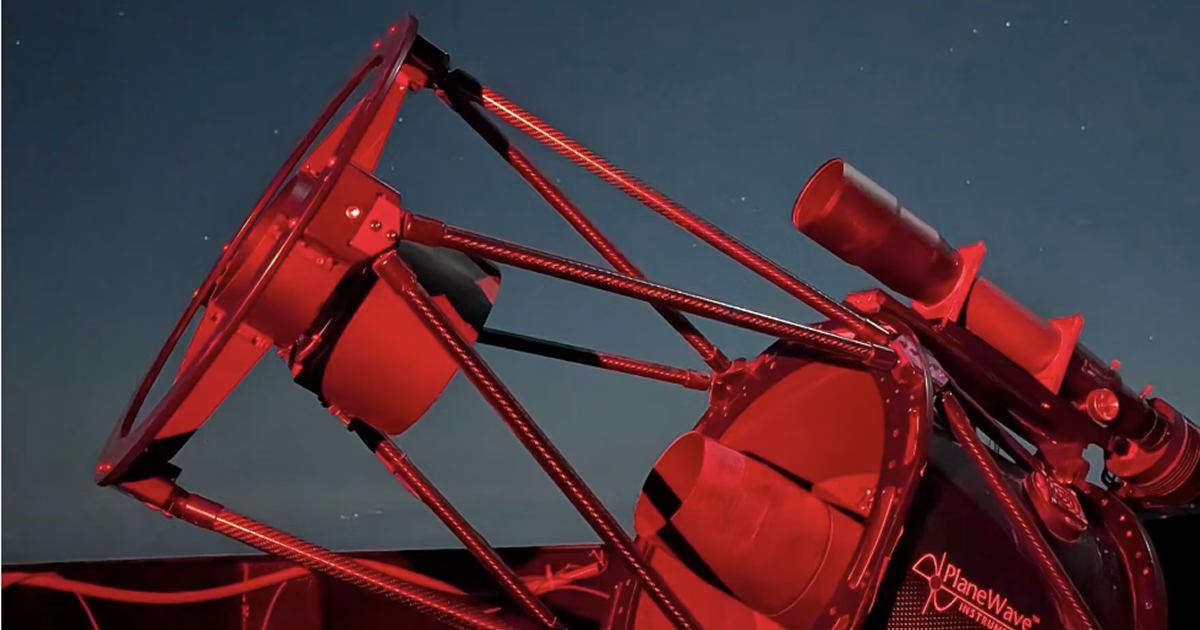
At Slooh, we believe the universe belongs to everyone. But making that vision a reality requires more than great technology — it requires extraordinary partners. Slooh's global telescope network operates from three of the most prestigious observatory sites on Earth, spanning three continents and covering both hemispheres. Each site was chosen for a reason: proven atmospheric quality, world-class infrastructure, and partnerships with institutions at the forefront of astronomical science.
Here's a look at the remarkable places — and partners — that make Slooh possible.
Observatorio del Teide, Canary Islands — Our Flagship Northern Hemisphere Observatory
Partner: Instituto de Astrofísica de Canarias (IAC)
Slooh's flagship observatory sits at 2,372 meters (7,782 feet) above sea level on the island of Tenerife, within the Observatorio del Teide — one of the world's premier astronomical observatory sites. Managed by the Instituto de Astrofísica de Canarias (IAC), this location benefits from extraordinary atmospheric stability, minimal light pollution, and clear skies more than 70% of the year.
The IAC is Spain's leading astrophysics research institution and one of the most important in the world. The Observatorio del Teide and its sister site, the Observatorio del Roque de los Muchachos on La Palma, together form one of the largest concentrations of astronomical telescopes in the Northern Hemisphere. Slooh is privileged to operate alongside some of the most advanced professional observatories on the planet.
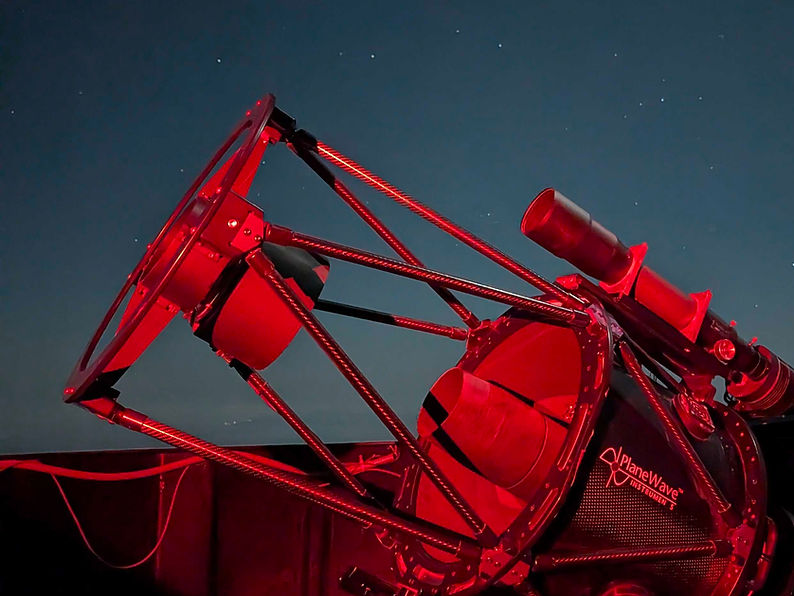
From this site, Slooh members control five telescopes covering an extraordinary range of capabilities: our flagship Half Meter telescope — a 508mm PlaneWave CDK20 equipped with a research-grade CCD camera and a full complement of photometric and narrowband filters — along with wide-field and ultra-wide-field imagers for sweeping views of nebulae and galaxies, a dedicated solar telescope for real-time chromospheric imaging, a high-magnification planetary and lunar system, and even a spectroscope for analyzing the light signatures of distant stars and nebulae.
This is the heart of Slooh's network, and our partnership with the IAC places our members alongside the professional astronomical community at one of the finest observing sites on Earth.
Minor Planet Center Observatory Code: G40
Santa Martina Observatory, Chile — Our Southern Hemisphere Research Hub
Partner: Pontificia Universidad Católica de Chile (PUC)
Chile is the undisputed capital of ground-based astronomy. The Atacama Desert and the mountains above Santiago offer some of the driest, clearest, and darkest skies anywhere on the planet — which is why the world's largest and most advanced professional observatories call Chile home.
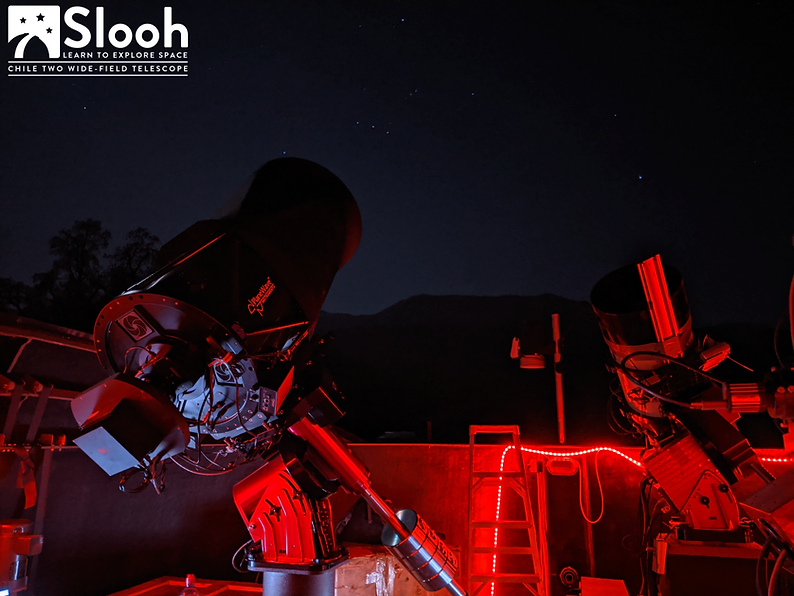
Slooh's southern hemisphere observatory is located at the Santa Martina Observatory, operated by the Pontificia Universidad Católica de Chile (PUC) — one of Latin America's most prestigious research universities and a leader in astrophysics. Situated in the hills of La Dehesa above Santiago at 1,450 meters elevation, this site gives Slooh members access to the treasures of the southern sky: the Magellanic Clouds, the Galactic Center, Omega Centauri, the Carina Nebula, and countless other targets that never rise above Northern Hemisphere horizons.
Slooh currently operates two telescopes at Santa Martina, including a 432mm PlaneWave CDK17 wide-field system equipped with a complete Johnson-Cousins photometric filter set — making it a powerful tool for standardized scientific photometry, variable star research, and multi-band imaging campaigns.
Our partnership with PUC connects Slooh members to Chile's extraordinary astronomical heritage and provides essential southern sky coverage for our global network.
Minor Planet Center Observatory Code: W88
Siding Spring, Australia — Our Premier Southern Hemisphere Observatory
Partner: Springbrook Remote Observatory
Slooh's newest observatory — launched on July 11, 2024 — is located at Siding Spring in New South Wales, Australia, within the Warrumbungle region, one of Australia's most celebrated dark sky areas. This site has been officially recognized for both its scientific value and natural beauty, making it an ideal home for Slooh's most advanced southern hemisphere telescope.
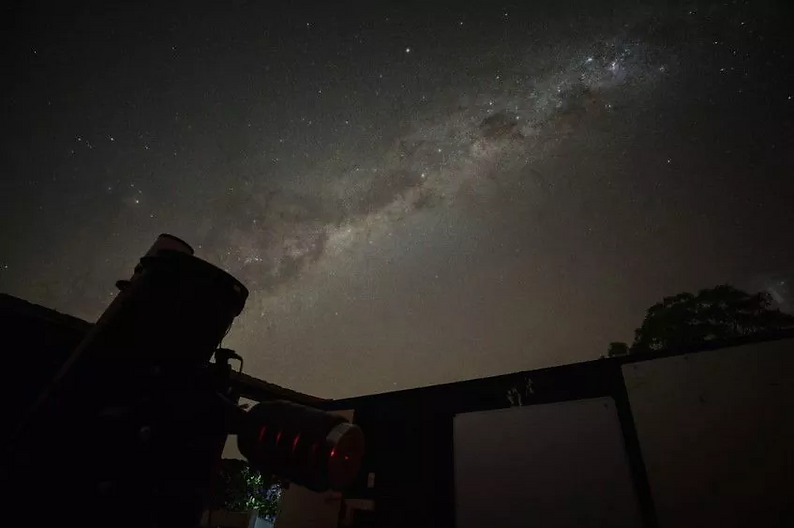
The observatory houses the twin of our Canary Islands flagship: a PlaneWave CDK20 Half Meter telescope equipped with a research-grade FLI CCD camera and a full set of LRGB, narrowband, and Bessel photometric filters. With a 37-arcminute field of view and 0.54 arcsecond per pixel resolution, this system delivers the same deep-sky imaging power and scientific capability as our Northern Hemisphere Half Meter — but pointed at the spectacular southern sky.
Having two Half Meter telescopes on opposite sides of the equator gives Slooh members something truly remarkable: the ability to observe virtually any object in the sky, at any time, from a world-class instrument at a world-class site. Whether you're imaging the Orion Nebula from Tenerife or the Tarantula Nebula from Australia, you're using professional-grade optics at a premier observing site.
The addition of the Australia observatory also provides critical redundancy for time-sensitive observations. When weather or daylight affects one hemisphere, the other is ready — ensuring Slooh members always have access to the sky.
Minor Planet Center Observatory Code: E62
A Global Network, A Shared Mission
Together, Slooh's three observatory sites span approximately 130 degrees of longitude across three continents, enabling near-continuous 24-hour operations. This geographic distribution isn't just about convenience — it's about resilience, scientific capability, and access.
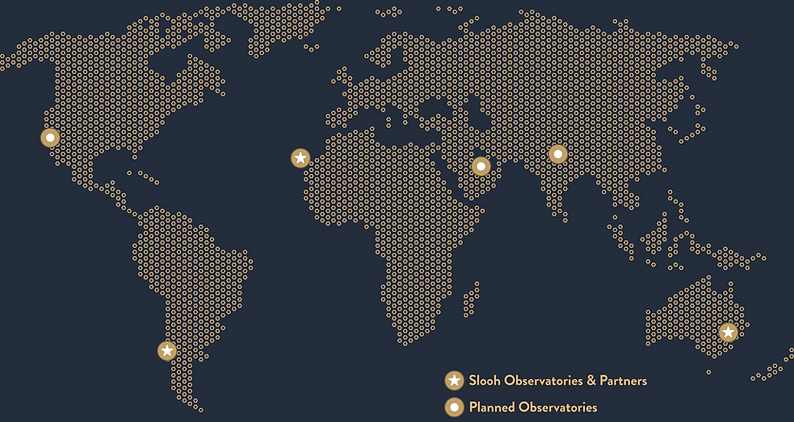
Our partnerships with the IAC, PUC, and Springbrook Remote Observatory reflect a shared belief: that the tools of astronomical discovery shouldn't be locked away in ivory towers. By placing research-grade telescopes at premier sites and putting them in the hands of curious people everywhere, Slooh and its partners are rewriting the rules of who gets to explore the cosmos.
With 9 telescopes, 3 continents, and over 13.8 million observations and counting, the Slooh network proves that world-class astronomy and public access aren't competing goals — they're complementary ones.
The universe belongs to everyone. Our observatory partners help us make that real.
Want to explore the cosmos from these extraordinary sites? Visit slooh.com to start your journey.