
Meet the Comet That Runs on Dry Ice — And Is About to Leave the Solar System for Good
.png)
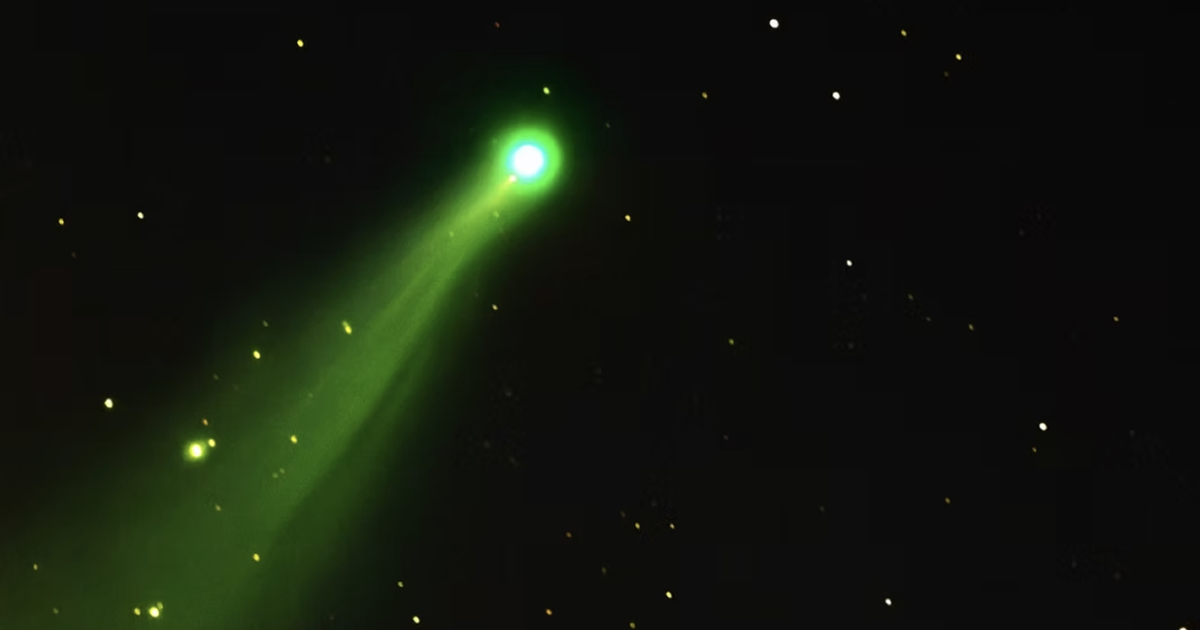
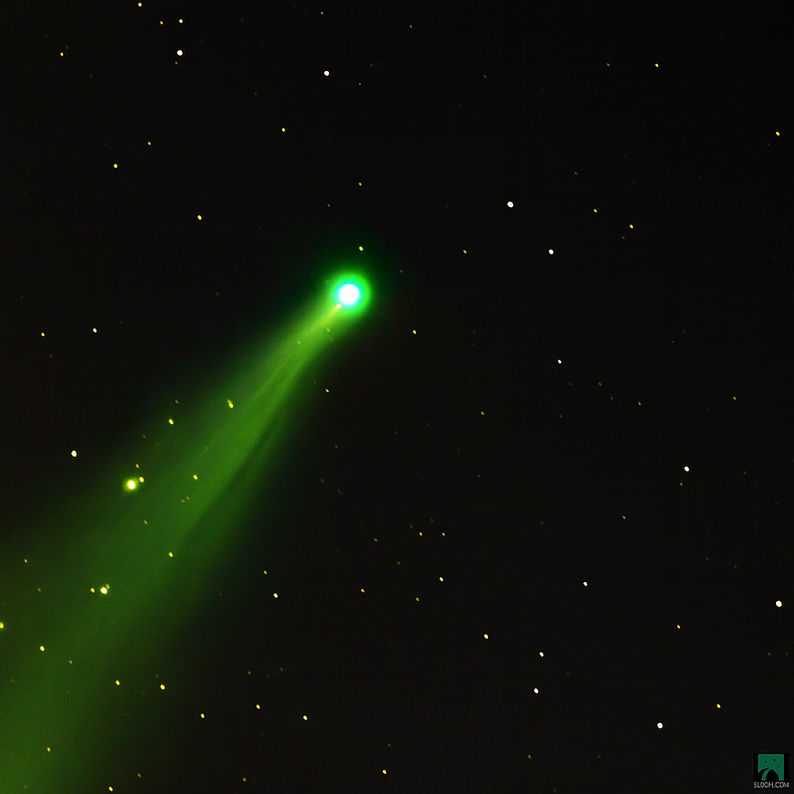
Right now, a comet is streaking through our corner of the Solar System, putting on a show that no human will ever see again. Comet C/2024 E1 (Wierzchos) is a frozen relic from the outermost edges of our Solar System that swung close to the Sun in January and is now on its way out. Forever.
And if you point a telescope in the right direction over the next few weeks, you can watch it go.
Discovered by Accident While Hunting Asteroids
On the evening of March 3, 2024, astronomer Kacper Wierzchos was scanning the sky with the 60-inch telescope on Mt. Lemmon in Arizona, part of NASA's Catalina Sky Survey. His job that night was hunting asteroids — rocky objects that might someday pose a threat to Earth. Instead, he spotted something fuzzy drifting through the constellation Draco. That fuzziness was the telltale sign of a comet: a ball of ice and dust surrounded by a growing cloud of gas.
Observers in Arizona, New Mexico, and the Canary Islands quickly confirmed the discovery, and the comet was officially named C/2024 E1 (Wierzchos). But what made astronomers sit up and take notice wasn't just the discovery itself. It was the comet's orbit.
A One-Way Ticket Out of the Solar System
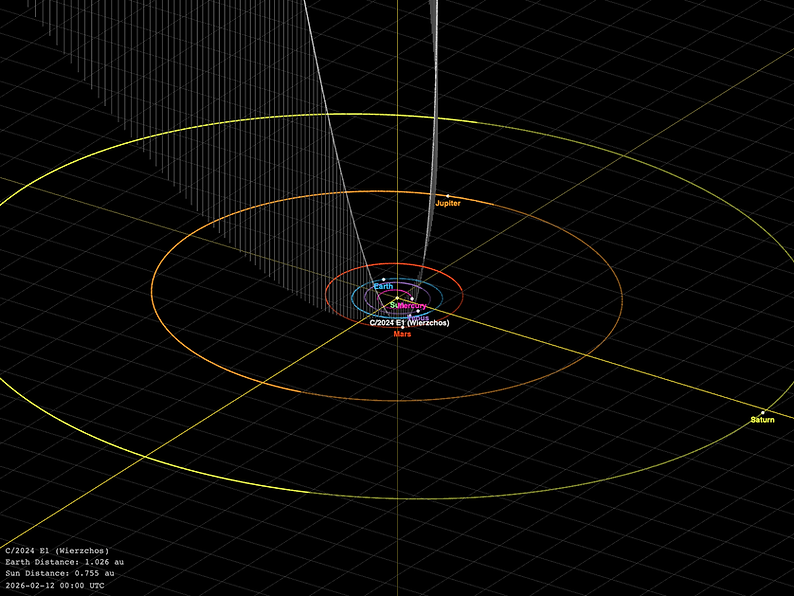
Most comets we see are repeat visitors. They loop around the Sun on predictable schedules, some returning every few years, others every few centuries. Comet Wierzchos plays by different rules. Its orbit is hyperbolic — meaning it has so much energy that the Sun's gravity can't hold onto it. After sweeping past the Sun, this comet will accelerate outward and eventually leave the Solar System entirely, drifting into interstellar space.
Scientists believe the comet originated in the Oort Cloud, a vast, spherical shell of icy objects that surrounds our Solar System at distances so extreme that even light takes more than a year to cross it. Something — perhaps the gravitational nudge of a passing star millions of years ago — knocked this chunk of primordial ice loose and sent it tumbling inward on a journey that has taken eons to complete.
On January 20, 2026, Comet Wierzchos reached perihelion, its closest approach to the Sun, passing just 0.566 AU away — slightly closer than Venus. It was a brief, blazing encounter. Now, as it speeds outward again, observers on Earth have a narrow window to catch a glimpse before it's gone.
Powered by Dry Ice, Not Water
When most people picture a comet, they think of ice melting in the Sun's heat, producing a spectacular tail. That's usually water ice doing the work. But Comet Wierzchos is different.
In early 2025, NASA's James Webb Space Telescope turned its powerful infrared eye on the comet while it was still seven times farther from the Sun than Earth. The results, published in the Monthly Notices of the Royal Astronomical Society, revealed something surprising: the comet's activity was driven primarily by carbon dioxide — essentially dry ice — rather than water or carbon monoxide.
Even more puzzling, the JWST team found no trace of carbon monoxide at all. Since carbon monoxide is actually more volatile than carbon dioxide (meaning it should vaporize more easily), its absence suggests that this comet may have lost its surface carbon monoxide long ago, possibly during its early formation billions of years before it was ever tucked away in the Oort Cloud.
Surrounding the comet's nucleus — estimated to be somewhere between 2 and 10 kilometers wide — was a sprawling cloud of dust, water ice, and CO₂ gas stretching roughly 10,000 miles across. It was an ancient time capsule, cracking open after billions of years in cold storage.
Your Window to Watch Is Closing
As of early February 2026, Comet Wierzchos is still visible in the evening sky, glowing at roughly magnitude 7 in the constellation Sculptor. That puts it just below what the naked eye can detect, but well within reach of binoculars or a small telescope. On February 17, the comet will make its closest approach to Earth at about 1.01 AU — roughly 151 million kilometers — before it begins to fade from view as it heads outward.
The Southern Hemisphere has had the best views so far, but observers worldwide still have a shot over the coming weeks as the comet gradually moves through the sky.
See It Live on Slooh
You don't need your own telescope to witness this once-in-forever event. Slooh's network of robotic telescopes — perched on mountaintops in the Canary Islands and Chile — can bring Comet Wierzchos straight to your screen in real time. Join a live viewing session, capture your own images of the comet, and share the experience with a global community of sky-watchers who are just as excited as you are.
Whether you're a seasoned astronomer or someone who just looked up at the stars and felt curious, this is your chance to see something that no one on Earth will ever see again. Comet Wierzchos is leaving, and it's not looking back.
Watch Comet Wierzchos Live on Slooh →
New to Slooh? Sign up today and get access to live telescope feeds, guided astronomy quests, and a community that's been waiting to explore the universe with you.