What's New on Slooh

Updated: Sep 8, 2025
Welcome to Slooh’s Monthly Newsletter!
Each month, we’ll bring you along on our journey through the cosmos with fresh updates, newly released features, and opportunities to connect with the vibrant Slooh community. Whether you’re an educator, student, or lifelong learner, this is your go-to space to discover what’s new and what’s next.
From hands-on activities that spark curiosity in classrooms to live cosmic events streaming from our telescopes around the world, we’ll highlight the many ways Slooh helps students explore Earth and space in meaningful, creative ways. Keep an eye out for special star parties, seasonal skywatching guides, and stories from educators who are bringing the universe down to Earth for their students.
Your Fall Skywatching Guide
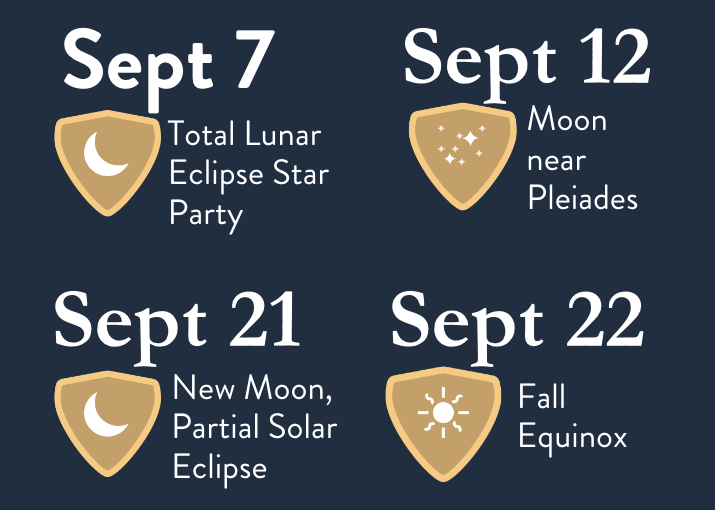
September 7th: Total Lunar Eclipse
September is packed with celestial moments you won’t want to miss. We’re kicking off the month in a spooky fashion with a Blood Moon Total Lunar Eclipse Star Party on September 7th—and that’s just the beginning!
On the night of September 7th, the Full Moon will pass completely into Earth’s shadow, transforming into a deep red “Blood Moon.” During totality, sunlight bending through Earth’s atmosphere filters out blue light and bathes the Moon in shades of copper and crimson. Every eclipse is unique—the exact color depends on Earth’s atmosphere at that moment, making this a true once-in-a-lifetime sight.
How to Watch:
- Slooh is hosting a LIVE star party for everyone
We even have a special Quest for the star party called the Total Lunar Eclipse of the Corn Moon 2025. Discover the mystery of corn moons and total lunar eclipses during this special Quest to commemorate the event.
September 12th: Moon near Pleiades
On the night of September 12th, keep your eyes on the eastern sky for a stunning celestial meet-up: the waning gibbous Moon will pass right near the Pleiades star cluster, also known as the Seven Sisters. For many cultures, the Pleiades have been a seasonal marker, guiding planting cycles and storytelling traditions. Now, you can witness their dance with the Moon in real time.
How to Watch:
- Look east after midnight on September 12th.
- The Moon will rise near Taurus, with the Pleiades shimmering just above.
- Through binoculars or Slooh’s telescopes, you can frame the Moon and the cluster together for a breathtaking view.
September 21st: New Moon & Partial Solar Eclipse
Then on September 21st, the New Moon brings a fresh lunar cycle—but this one comes with a spectacular twist: a Partial Solar Eclipse! As the Moon slips between Earth and the Sun, it will cover part of the Sun’s bright face, casting a cosmic shadow and creating a breathtaking sight in the daytime sky. Unlike a lunar eclipse, solar eclipses remind us just how perfectly aligned our solar system can be—and how small Earth’s place is in the grand celestial dance.
How to Watch:
- Only visible from select regions, the eclipse will appear as a “bite” taken out of the Sun.
- Eye safety is crucial—never look directly at the Sun without proper eclipse glasses or filters.
- Use Slooh's telescopes so no matter where you are, you can witness the Moon’s shadow sweeping across the Sun in real time.
September 22nd: Fall Equinox
And finally, on September 22nd, the Sun will cross the celestial equator, marking the Fall Equinox—the official start of autumn in the Northern Hemisphere (and spring in the Southern Hemisphere). The equinox is one of only two days each year when day and night are nearly equal all around the globe. It’s a cosmic reminder of balance, as Earth tilts and sunlight shifts to paint our skies with the colors of a new season.
How to Watch:
- Watch the Sun rise due east and set due west—a perfect east-to-west alignment you won’t see every day.
- From here, nights will grow longer than days in the Northern Hemisphere as we head toward winter.
- Many cultures celebrate this turning point with harvest festivals, honoring the connection between the skies above and life on Earth.
Back to school with Slooh
The Slooh team can't wait to kick off another school year with our community. We have new school adoptions to share, but first, we want to express our gratitude to our returning Sloohvians, whether it's your second year on Slooh or twentieth, it's your passion and enthusiasm that keep this community flourishing and growing. Remember, every time you share an observation, complete a Quest, or connect with other Sloohvians around the globe, you’re not just exploring the universe—you’re also earning Gravity Points.
These points are your ticket to rising through the ranks on Slooh’s leaderboard, where your curiosity and contributions get to shine. The more you engage, the more you’ll see your name climb higher—giving you a chance to be featured on Slooh's Gravity Awards!
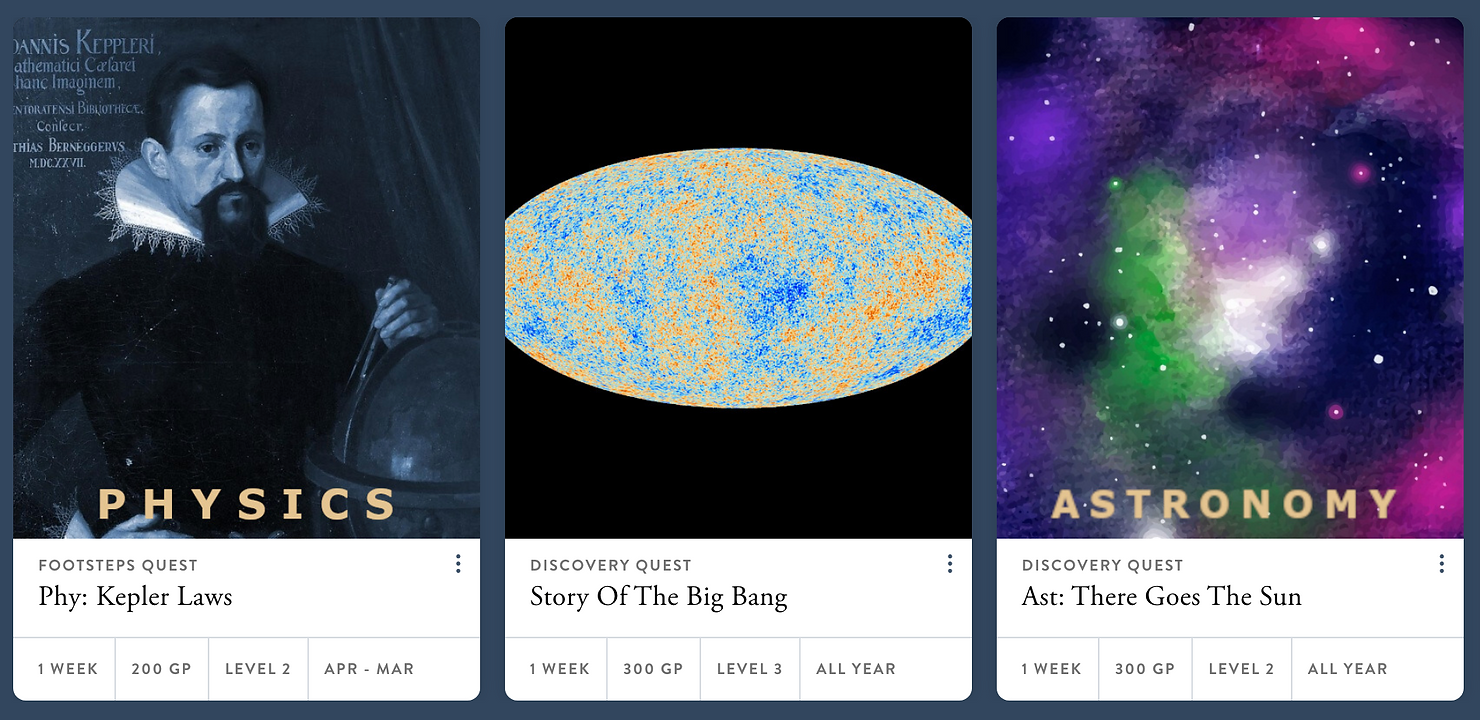
This Fall, as always, we are rolling out more and more Quest learning activities for you all to enjoy. Specifically, Slooh is excited to launch refreshed high school astronomy and physics Quests this school year! We’ve added engaging new content—including advanced missions, the Big Bang Theory, and the heliocentric model of the solar system—while revising our physics Quests to emphasize deeper analysis and problem solving. We’ve also updated existing Quests to sharpen their focus and strengthen standards alignment, giving teachers powerful tools to guide students through complex concepts with clarity and confidence. We can't wait for you to try them out and hear what you think!
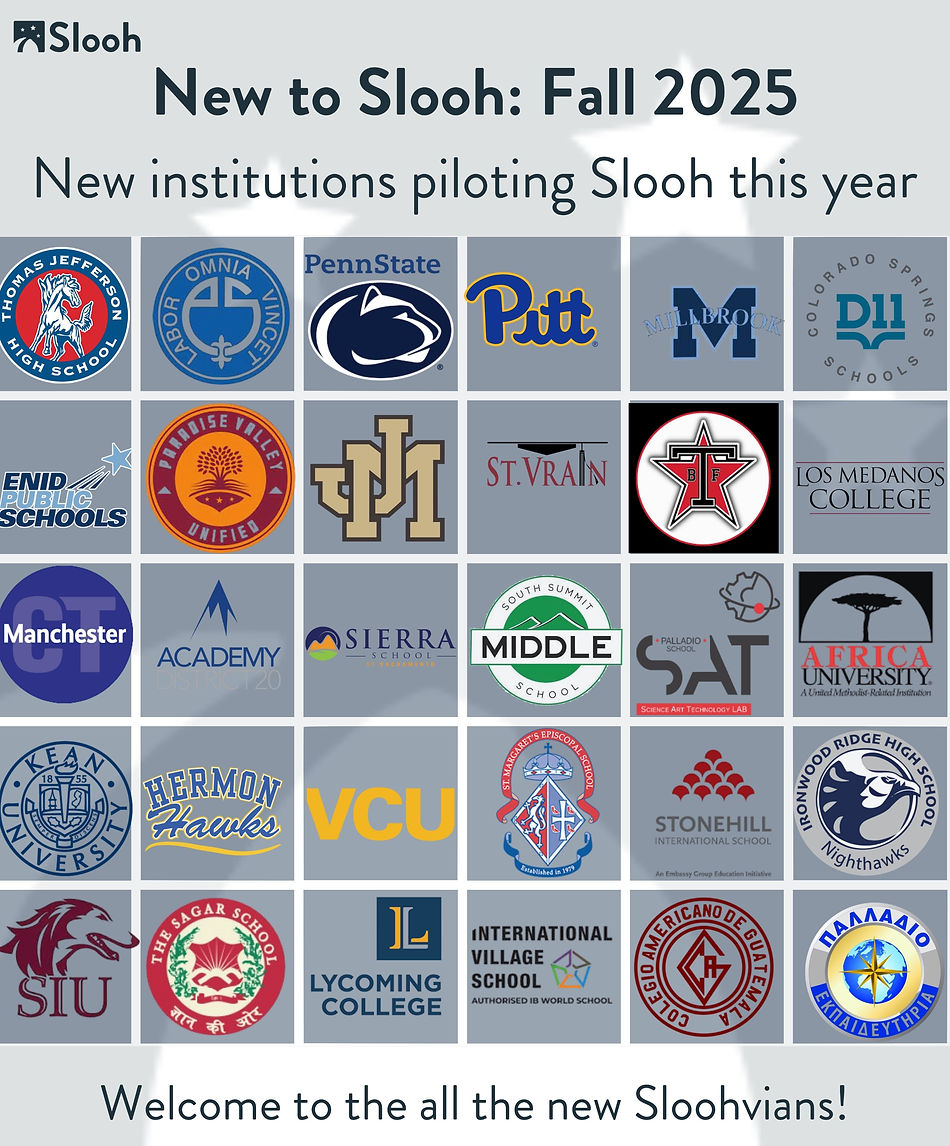
Now, to highlight some of our newest school adoptions for the 2025 school year! We are thrilled to welcome thirty new schools (K-12 and higher ed) to the Slooh community. Check out the new schools represented below!
Let's have a great school year together! Please don't hesitate to reach out to us, whether it's for a support issue or just to share your work; we love to hear from you.
Falling for the Moon Contest
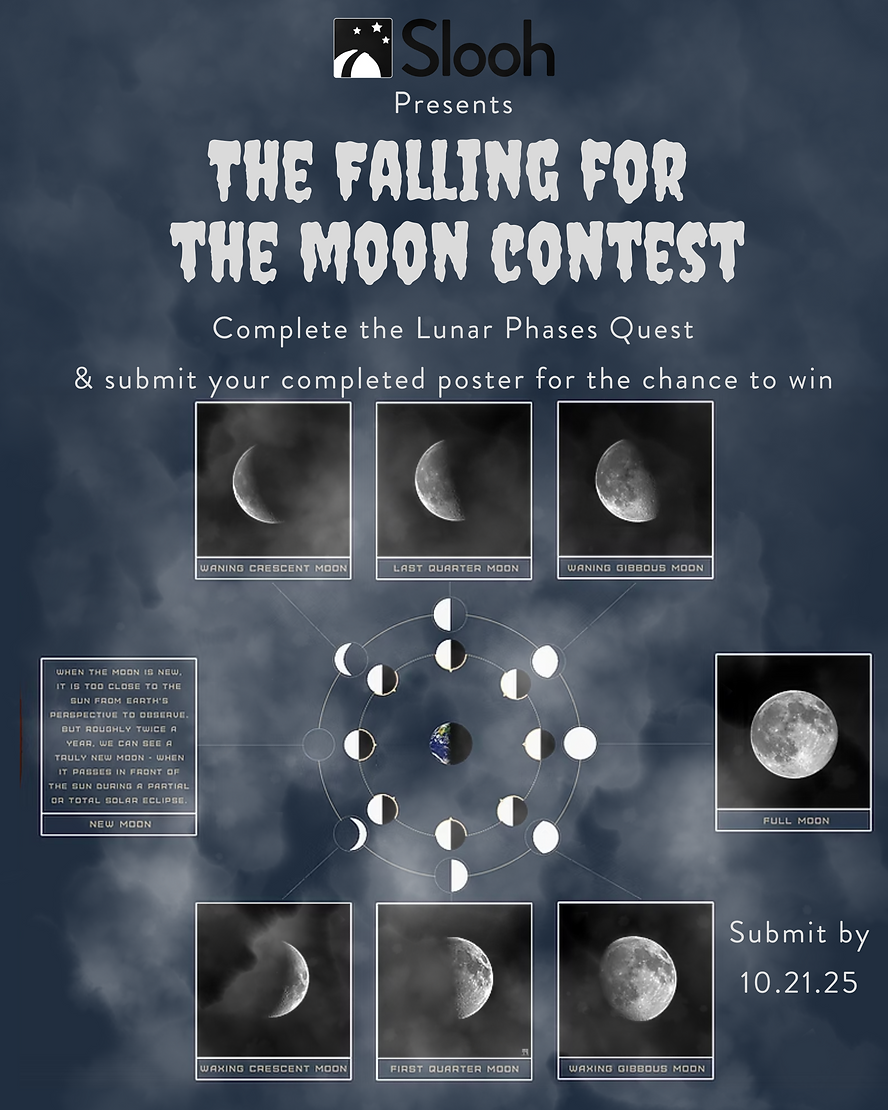
In honor of this spooky season being filled with so much Lunar activity, from a Total Lunar Eclipse in early September to a Supermoon in early November, Slooh is hosting a “Falling for the Moon” poster contest! This is a great chance for students to explore lunar science in a hands-on way and creatively showcase what they’ve learned.
Students will complete Slooh’s Lunar Phases Quest (for their grade level), which guides them through real-time telescope observations and interactive learning about the Moon’s phases. Afterward, they’ll design and submit a poster that reflects their understanding and creativity. Please note that this Quest takes a full month to complete as you capture images of each phase. Learn more here.
Fall Quest Guide

Fall is an exciting season for stargazing, and we've lined up Quests that make the most of what's visible in September skies. Check out some of your September options below!
Spotlight on Jupiter: As Jupiter returns to the night sky in mid-September, it’s the perfect opportunity to dive into the Geocentrism Versus Heliocentrism Quest and the Europa Clipper Mission Quest. These activities help students connect history, planetary science, and NASA’s upcoming exploration of Jupiter’s icy moon, Europa.
Celestial Gems for a New Season: With the September equinox around the corner, students can begin the Fall–Spring Celestial Gems Collection Quest. Each seasonal Celestial Gems Quest introduces learners to the best treasures in the sky that season while building a deeper understanding of the changing heavens.
The Hunter Rises: Orion is climbing higher into the sky each night. That makes September the ideal time to begin The Hunter Quest. Once complete, students will also have captured the Orion Nebula, one of the four nebulae needed for the all-new Nifty Nebulae Quest. We now offer two versions of Nifty Nebulae—an astronomy version and a physics version, the latter providing an in-depth look at light behavior and emission spectra.
Share Your Discoveries: Encourage students to share the images they capture with our telescopes! The Gravity Awards Quest teaches how to post Observations and engage with the Slooh community. These Quests are a great way to spark curiosity as students head back to school and the skies transition into fall.
Student Spotlight
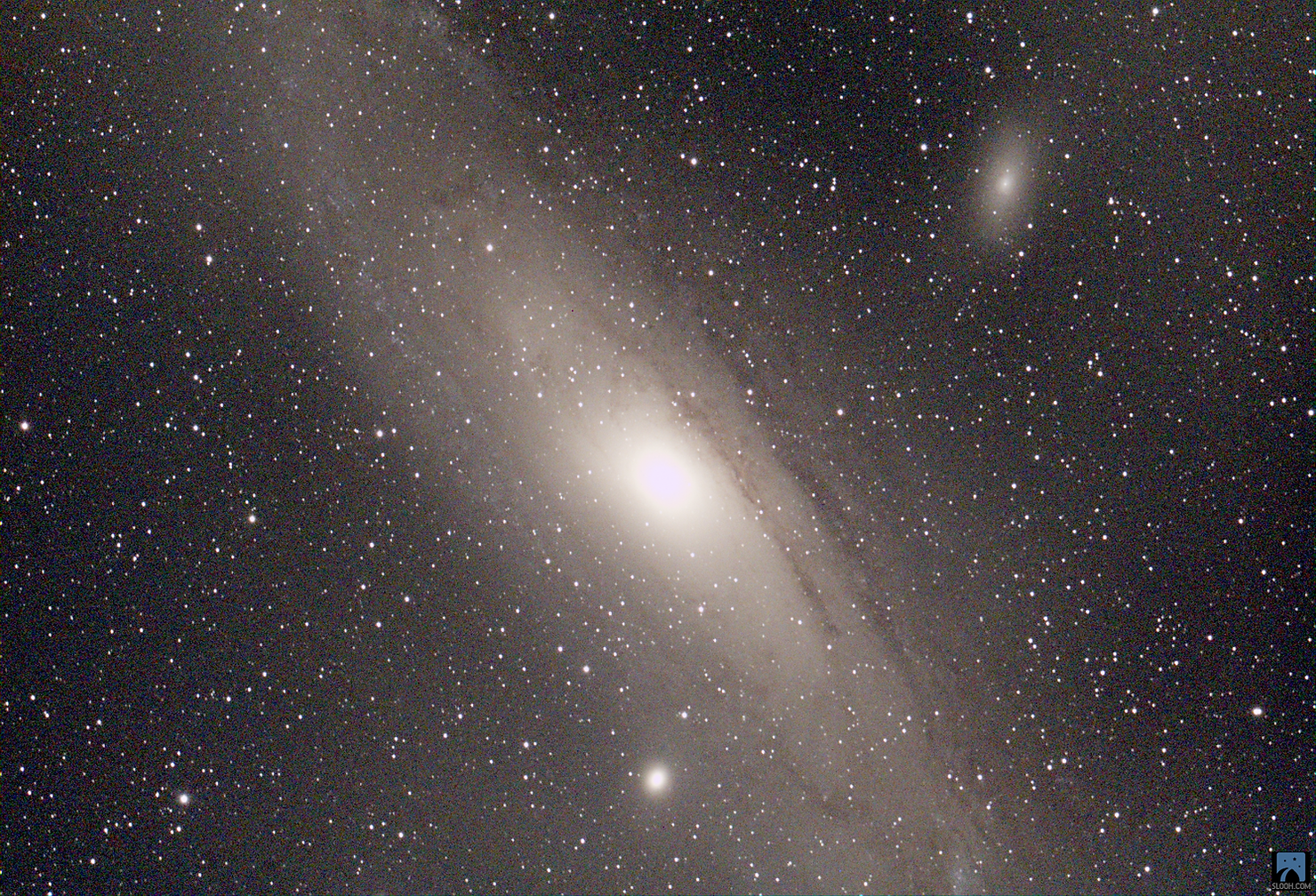
With the new school year beginning, we have so many new students spotlight on Slooh. This month, we are highlighting an observation from new Slooh member LukeD0.2025, a high school student from Scottsdale Unified School District. Check out his outstanding observation of the Andromeda Galaxy, taken on the Canary Three, that he shared with the Slooh community. As he states below, this was his very first mission on Slooh!
Featured Slooh 1000

The Andromeda galaxy (seen above), also known as M31, and the closest spiral galaxy to our Milky Way, is looking spectacular in the Canary Three Deep Sky telescope. It’s a current featured object and a must-see this month.
Once thought to be in our galaxy and called the Andromeda Nebula, we now know Andromeda is a massive spiral galaxy home to about a trillion stars, the largest in our galactic neighborhood. Andromeda and the Milky Way are hurtling towards each other at an astounding 249,791 miles per hour, and are destined to collide in about 3.75 billion years.
Schedule your own mission to the Andromeda galaxy (M31) now!
And check out recent observations of Andromeda from the community!